Stick With It: The Science and Skill of Kinesiology Taping

"Over the years, the tape has been marketed as everything from a performance enhancer to a pain-relieving solution ... the reality is that Kinesiology Taping is neither magic nor meaningless."
104574 Stick With It: The Science & Skill of Using Kinesiology Tape
Kinesiology Tape has become a widely used tool across rehabilitation and performance settings, yet many clinicians lack confidence in when and how to use it effectively. This live-interactive presentation breaks down the fundamentals of using Kinesiology Tape—what it is, how it works, and the physiological principles behind its use in the neuromuscular system to its role in pain modulation and...
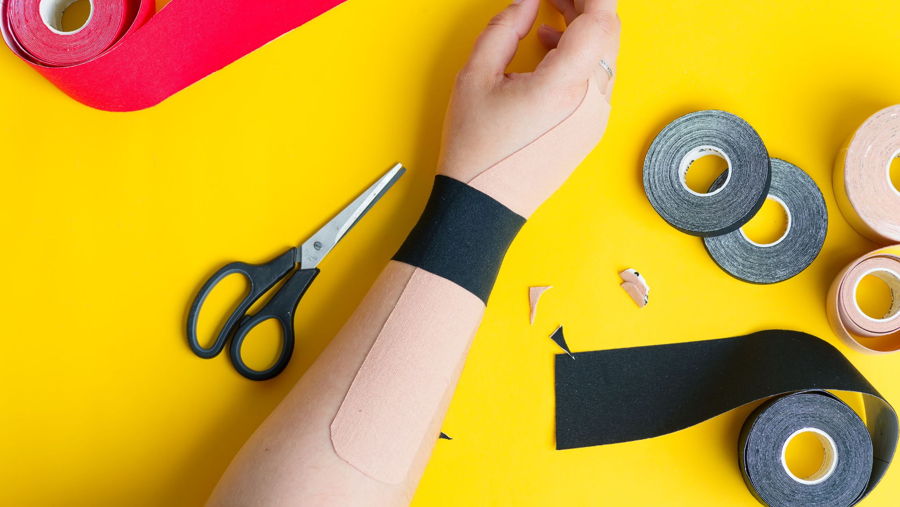
Walk into almost any rehabilitation clinic, athletic training room, sporting event, or fitness facility today, and you're likely to see colorful strips of tape adorning shoulders, knees, ankles, backs, and wrists.
Kinesiology Tape has become a familiar sight in healthcare and sports performance settings, yet despite its widespread use, it remains one of the most debated interventions in rehabilitation.
Some clinicians swear by it. Others dismiss it as little more than a placebo. Many fall somewhere in the middle, recognizing that while Kinesiology Taping may not be a miracle cure, it can be a valuable tool when used intentionally and integrated into a comprehensive treatment plan.
So, what does the evidence actually tell us? How does Kinesiology Tape work? When should it be used, and when should it be avoided? Most importantly, how can healthcare professionals apply it in a way that supports meaningful functional outcomes for the patients and clients they serve?
These are some of the questions we'll explore below, as well as in our upcoming presentation on Kinesiology Taping.
Looking Beyond the Myths
One of the biggest challenges surrounding Kinesiology Taping is separating fact from fiction.
Over the years, the tape has been marketed as everything from a performance enhancer to a pain-relieving solution capable of correcting movement dysfunction, reducing swelling, improving posture, and accelerating recovery. While some of these claims have merit, others have been exaggerated or oversimplified.
The reality is that Kinesiology Taping is neither magic nor meaningless.
Like many interventions used in rehabilitation, its effectiveness depends heavily on clinical reasoning, patient presentation, treatment goals, and integration with other evidence-based strategies. Understanding what the tape can realistically accomplish—and what it cannot—is essential for making informed decisions in clinical practice.
Throughout the live course, we will examine current research findings, discuss proposed physiological mechanisms, and explore how taping fits within modern rehabilitation and performance models.
A Tool, Not a Treatment Plan
Perhaps the most important mindset shift for clinicians is viewing Kinesiology Tape as a tool rather than a treatment in itself.
No amount of tape can replace appropriate exercise prescription, patient education, activity modification, strength development, motor control training, or behavioral change. However, tape can serve as an adjunct that supports these interventions by helping patients move with less discomfort, increasing body awareness, or providing sensory feedback that encourages more efficient movement patterns.
When used appropriately, taping can help bridge the gap between the treatment table and real-world activity.
For occupational therapists, this may mean helping a patient tolerate upper extremity tasks required for dressing, grooming, cooking, or work-related activities. For physical therapists, it may assist patients as they progress through rehabilitation following injury or surgery. Athletic trainers may use taping to support movement confidence during return-to-play progression, while nurses may encounter patients who benefit from non-pharmacological strategies for symptom management and functional participation.
The common thread is function.
The goal is not simply to apply tape correctly. The goal is to understand how taping may contribute to meaningful outcomes that matter to the individual in front of us.
Understanding the "Why" Behind the Tape
Many clinicians learn taping techniques through observation, continuing education courses, social media demonstrations, or mentorship experiences. While these resources can be valuable, they sometimes emphasize application patterns without fully explaining the rationale behind them.
As a result, practitioners may know where to place tape but remain uncertain about why they are placing it there.
A significant portion of our upcoming session will focus on developing a deeper understanding of the theoretical foundations behind Kinesiology Taping.
We will discuss proposed mechanisms such as:
- Sensory input and proprioceptive feedback
- Pain modulation strategies
- Neuromuscular facilitation and inhibition concepts
- Lymphatic and circulatory considerations
- Movement cueing and motor learning applications
While research continues to evolve in these areas, understanding these concepts allows clinicians to move beyond memorized taping patterns and toward individualized clinical decision-making.
Clinical Reasoning Matters More Than Perfect Technique
One of the most common mistakes clinicians make when learning Kinesiology Taping is becoming overly focused on technique while overlooking clinical reasoning.
Questions such as:
- What problem am I trying to solve?
- What outcome am I hoping to influence?
- What functional activity is currently limited?
- What additional interventions should accompany this taping strategy?
...often matter far more than the exact shape of the tape itself.
In our presentation, we will introduce practical decision-making frameworks that help clinicians determine when taping may be appropriate, when it may provide limited benefit, and how to match taping strategies to specific patient goals.
Rather than memorizing dozens of techniques, participants will learn how to think through taping decisions in a systematic and patient-centered way.
Connecting Taping to Functional Outcomes
For rehabilitation professionals, interventions should ultimately support participation in meaningful activities.
Patients rarely seek treatment because they want less pain in isolation. They seek treatment because pain is preventing them from doing something important.
Perhaps they cannot lift their child without discomfort. Maybe they struggle to perform work duties, participate in recreational sports, tolerate prolonged standing, complete household tasks, or engage in self-care activities independently.
This is where Kinesiology Taping becomes most valuable.
The tape itself may not be the destination, but it can help facilitate the journey toward improved function.
Throughout the upcoming course, we will examine real-world examples demonstrating how taping can be integrated into broader rehabilitation plans designed to improve activity tolerance, movement confidence, and participation in daily life.
Common Clinical Applications
Attendees can expect to explore a variety of common clinical scenarios where Kinesiology Taping is frequently utilized.
Examples include:
- Shoulder pain and movement dysfunction
- Postural awareness and movement cueing
- Patellofemoral pain
- Ankle instability
- Swelling management
- Low back discomfort
- Upper extremity functional limitations
- Return-to-sport progression
For each application, the emphasis will remain on clinical purpose rather than simply reproducing a taping pattern.
Participants will learn to identify the intended goal of the intervention and evaluate whether the tape is producing the desired effect.
What the Evidence Says Today
One of the most valuable aspects of professional development is the opportunity to challenge assumptions.
The evidence surrounding Kinesiology Taping continues to grow, and the findings are often more nuanced than many clinicians expect.
Current research generally suggests that Kinesiology Taping may provide short-term benefits for pain reduction, proprioceptive awareness, and functional performance in certain populations. However, evidence supporting long-term structural changes or superior outcomes compared to comprehensive rehabilitation interventions remains limited.
Rather than viewing this as a limitation, clinicians can use this information to better position taping within their treatment toolbox. ◼
104574 Stick With It: The Science & Skill of Using Kinesiology Tape
Kinesiology Tape has become a widely used tool across rehabilitation and performance settings, yet many clinicians lack confidence in when and how to use it effectively. This live-interactive presentation breaks down the fundamentals of using Kinesiology Tape—what it is, how it works, and the physiological principles behind its use in the neuromuscular system to its role in pain modulation and...
Want to make the most of everything Impact CE has to offer?
The Ignite Membership unlocks unlimited live webinars, hundreds of self-paced courses, a growing library of recorded content, and free e-library access — all in one place, for one low annual price. Learn more about Ignite today.
Opinions and viewpoints expressed in this article are the author's, and do not necessarily reflect those of CE Learning Systems.