Addictions, Substance Use Category

CDCA Renewable Certification

30 CE Hours
1 member has taken this course
Skip to Course Registration Info

About the Course

This is the education bundle that has been approved by the OCDPB for those seeking their initial CDCA Renewable Certificate.

This course is based on the recorded webinar and reading online article, CDCA Renewable Certification created by Wendy Wade et al in 2026.

Course Material Authors

Course Material Authors authored the material only, and were not involved in creating this CE course. They are identified here for your own evaluation of the relevancy of the material this course is based on.

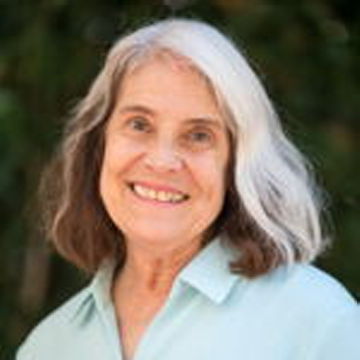
Wendy Wade

Wendy Wade, PhD, LPCC and CADC 1 has worked with children and families for many years. She began by facilitating educational support groups with children of parents with substance use disorder in the 1980s when the field was first beginning. She taught in elementary school, both public and private, and was principal in a public elementary school. Her next opportunity was as coordinator of Children’s Program at the Betty Ford Center 2000s. She began training and speaking at conferences at that time. She volunteered at Santa Cruz County Children’s Mental Health working up assessments to ascertain if psychological issues may be interfering with meeting educational goals for children with IEPs. She also provided therapeutic support to children in special education, their families, and school staff. She was counselor/case manager with adults in inpatient treatment for substance use disorder and was also coordinator of family program services at Beacon House in Northern California. She volunteered as camp counselor bi-monthly for 4 years at Camp Mariposa for COAs. The children were from ages 9-12 and were referred by Youth Services in San Diego. She has continued providing training for teachers, counselors, therapists, and addiction professionals especially beginning in 2016 to the present and speaks at conferences as often as possible about this marginalized cohort of children who need understanding and information on how to help them. She has been a trainer for the National Association for Children of Addiction (NACoA) for several years, first on the Celebrating Families Curriculum and more recently with the revised Children’s Program Kit She has co-written curricula for online training in both curricula, and is developing a significantly revised in-person training on the CP Kit. She is Assistant Professor at Palo Alto University in the MA in Counseling Program, beginning in 2014. She is lead teacher in the Addiction Counseling Class, and teaches several other classes as well

Danny Wamsley, LCASA

Danny Wamsley is a licensed addiction specialist with a clinical certification with the National Association of Dual Diagnosis (NADD). Danny currently works in manage care as a DSS liaison. His primary goal is to provide consultation to social workers who are involved with child-protective services and In-Home Services. Danny also has 10+ years of experience working with individuals diagnosed with intellectual disability and substance use. Danny’s professional interests include addictions/recovery, intellectual disability, foster care, military, trauma, and domestic violence.

Kathryn Held, Psy.D., CADC III

Kathryn Held, Psy. D associate and CADC III, is an individual therapist at Visions adolescent treatment centers. With a decade of experience in the mental health field, Kathryn specializes in the treatment of anxiety disorders, OCD, and the OCD spectrum. Kathryn also has expertise in working with LGBTQ+ adolescents while navigating complex family systems. Her current research projects include adolescent suicide and the use of OCD art interventions in anxiety and OCD treatment. She is trained in CBT, ACT and Exposure and Response Prevention. Her empathetic and artistic approach helps support, educate, and instill agency in her clients. Prior to joining the Visions team, Kathryn worked in various treatment settings including detox, sober living, and as the Program Director of a dual diagnosis outpatient treatment center.

Diane Bigler, LCSW, LSCSW

Diane Bigler, LCSW, LSCSW has over 25 years of experience in social work and mental health practice. She is a frequent national continuing education speaker and former Professor of Social Work at The University of Kansas, School of Social Welfare. Diane has been involved in the provision of clinical supervision for over 15 years and has trained hundreds of clinicians on succeeding at supervision.

Target Audience

This course is intended for Addictions professionals, including addiction counselors. It is appropriate for beginner levels of knowledge.

Learning Objectives

After taking this activity, you should be able to:

  1. 1 Identify two trauma-informed strategies that can be used in session and describe two trauma-responsive approaches in clicnial work.
  2. 2 Identify common risks and protections across four areas biological, psychological, social, and environmental and discuss how risk and protective factors can add up or balance each other out.
  3. 3 Apply person-first, non-stigmatizing, and culturally responsive language when working with individuals experiencing substance use disorders.
  4. 4 Demonstrate foundational communication skills used in addiction counseling.
  5. 5 Utilize evidence-based approaches such as Motivational Interviewing (MI) and verbal de-escalation techniques to support client motivation, safety, and readiness for change.
  6. 6 Identify and describe each of the 12 core functions and their role in the substance abuse counseling process.
  7. 7 Identify and differentiate between key types of clinical documentation used in addiction treatment.
  8. 8 Recognize challenging situations in group therapy and use appropriate risk management strategies in challenging situations.
  9. 9 Identify at least two (2) person centered facilitation skills that can be used in group settings and list 3 ommon types of SUD groups.
  10. 10 Identify the 6 Dimensions of the ASAM criteria and at least 3 criteria for diagnosing a Substance Use Disorder.
  11. 11 Identify 2 ICD-11 codes used with SUD patient.
  12. 12 Interpret and integrate assessment data across domains to collaboratively identify client priorities, treatment needs, and appropriate interventions.
  13. 13 Match interventions to client needs, traits, and stages of change and apply a person-centered, trauma-informed framework to treatment planning
  14. 14 Describe the ethical responsibilities and scope of practice for CDCAs.
  15. 15 Identify at least two characteristics of effective supervision practices and discuss two potential challenges in maintaining professional boundaries.
  16. 16 Analyze ethical dilemmas related to social media, confidentiality, and supervision.

Disclosure to Learners

CE Learning Systems adheres to the ACCME's Standards for Integrity and Independence in Accredited Continuing Medical Education. Any individuals in a position to control the content of a CE activity – including faculty, planners, reviewers, or others ― are required to disclose all relevant financial relationships with ineligible entities (formerly known as commercial interests).

The following relevant financial relationships have been disclosed by this activity's planners, faculty, and the reviewer:

Planners and Reviewers

The planners of this activity have reported that they have no relevant financial relationships.

Material Authors

Any relevant financial disclosures for course material authors can be found in the article.

Commercial support

There is no commercial support for this distance-learning course.

Use our CE Approvals tool to look up your state requirements and how can help you meet them, or log in to your member account to show approvals relevant to your licensure.

Agenda

1. Introduction to Substance Use
This module will explore the nature of substance use disorders (SUDs), multiple pathways to recovery, the complex relationship between trauma and addiction, practical, client-centered tools for supporting individuals in recovery, and the risks and protective factors that can impact recovery.
2. Core Functions and MI/CBT
This module will begin by exploring the 12 core functions of a SUD counselor and then discuss the foundations of Motivational Interviewing (MI) and Cognitive Behavioral Therapy (CBT).
3. Documentation and Essential Skills

This section will explore core communication skills, person-first language to reduce stigma, strategies for client engagement, cultural humility, de-escalation techniques, and foundations of Motivational Interviewing (MI).  Participants will  also learn the essential role documentation plays in supporting client care, meeting legal and ethical standards, and promoting effective communication across treatment teams.

4. Roles, Process and Person Centered Groups
This module covers identifying and managing challenging dynamics that may arise within group therapy settings and the appropriate use of person-centered facilitation skills in group settings.
5. Leadership and Motivational Interviewing in Groups
Topics covered in this module include handling conflict, managing disruptive behaviors, and addressing sensitive disclosures.   We will also look at the use of Motivational Interviewing in Groups.
6. ASAM, DSM 5-TR and ICD-11
This module explores how the ASAM Criteria and DSM 5-TR can be applied to improve assessment and placement of individuals with Substance Use Disorders (SUD). DSM 5-TR diagnostic criteria for specific substances will be covered and an overview of the ICD-11 will be provided.
7. Treatment Planning
This module provides practical, trauma-informed guidance on how to collaboratively interpret assessment data, identify and prioritize client needs, and match interventions to individual traits, goals, and stages of change.
8. Role of the CDCA
In this final module, we will explore the professional roles, ethical standards,supervision requirements, scope of practice, and boundary expectations for Chemical Dependency Counselor Assistants (CDCAs). Through studying NAADAC's Code of Ethics, Ohio Administrative Code, and models for clinical supervision, students will develop a clear understanding of their responsibilities within addiction treatment settings.

Exam Questions

All exam questions for the course are visible on this page for members of Impact CE.

Membership is free, and you can register today! You'll only pay when you're ready to purchase a course, or if you take advantage of the Unlimited Package.

If you're already a member, please sign in to see the exam questions for this and all other courses.

Discuss this course

You can share your thoughts about this course after you pass the exam.

Sign In or Register to get started.

Frequently Asked Questions

Yes, most likely. Look Up Your State Board for more detailed information. Logged-in site members will see the relevant approval information displayed in the Approvals tab for every course.

If you are having trouble using Impact CE, please contact us! We would be happy to accommodate your needs right away, and your input will help us make Impact CE more accessible for future users too.

Use the Enroll In This Course button and just follow the instructions! You don't pay anything until you're ready to take an exam.

To complete the course, review the course objectives, then review the material, and then pass the exam with a score of 75% or greater and lastly complete an evaluation.

Most of our self-paced courses are based on online articles available for free to the public. Some courses, such as those based on books, require that you purchase the material. Use the Materials tab for more info. Live courses simply require that you attend.

Your certificate(s) will be available to download or email immediately when you pass the course exam and complete the evaluation.

Yes! Use the Help widget at the bottom-right of the screen anywhere on Impact CE to search our help docs, or to ask our support team for help. Unlike most of our competitors, Impact CE has live US-based support reps to help you by email, chat, or phone.

Start your CE Journey now - complete your first course today, on us.

Try for free - no commitment required.

Copyright © 2026 CE Learning Systems LLC

Please Confirm