Habit Reversal Training: What It Is, How It Works, and Why Your Clients Needed It Yesterday

"Your client is not sitting down and deciding to pull. They're watching TV, they're on a call, they're reading, and at some point they look down and realize they've been pulling for ten minutes ... Awareness Training is about closing that gap."
104597 Habit Reversal Treatment for Body Focused Repetitive Movements
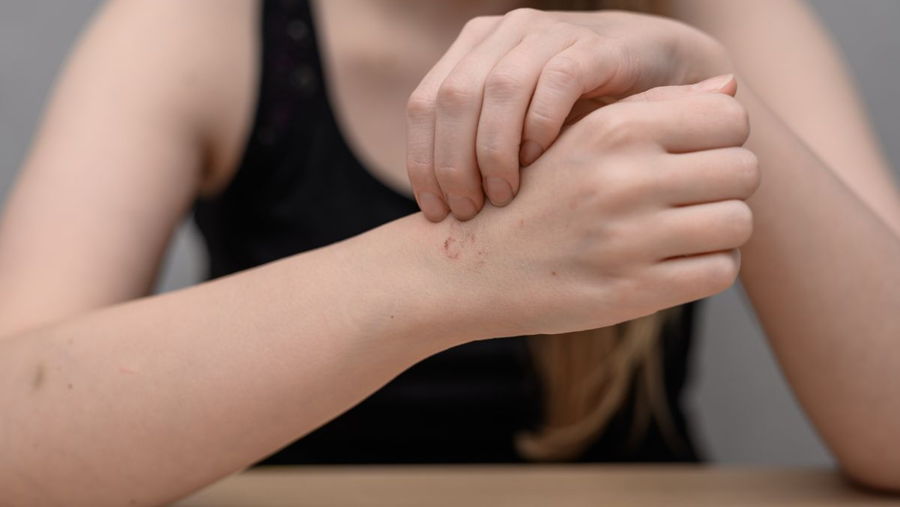
Body-Focused Repetitive Behaviors (BFRBs), such as hair pulling (trichotillomania), skin picking (excoriation disorder), and nail biting are compulsive disorders that significantly impact individuals' daily lives and emotional well-being. Habit Reversal Training (HRT) has emerged as an evidence-based behavioral intervention that effectively addresses these challenging behaviors.
This presentation will provide mental health professionals with a comprehensive understanding of HRT, its theoretical...
Most people with Body-Focused Repetitive Behaviors (BFRB) have been told some version of the same thing their whole lives.
"Just stop."
"Keep your hands busy."
"Try a fidget toy."
"Be more mindful."
And most of them have tried all of it. For years. And it didn't work. Not because they weren't trying hard enough. Because none of those things target what is actually driving the behavior.
That's where Habit Reversal Training (HRT) comes in. And it actually works.
If you are seeing clients who pull, pick, bite, or scratch and you are not using HRT, this is the article I wish someone had handed me earlier in my career.
Let's start with what BFRBs actually are
Body-focused repetitive behaviors are a category of behaviors that involve repetitive, compulsive touching, pulling, picking, or biting of the body. Trichotillomania, excoriation disorder, onychophagia, dermatillomania. They fall under the OCD and related disorders umbrella in the DSM-5.
But here's what makes BFRBs different from a nervous habit or a tic: They serve a function.
For most clients, the behavior is not random. It's regulated. It provides something for them in the moment…stimulation, relief, a way to release tension or boredom or emotional overwhelm. Sometimes it's automatic, happening completely outside of awareness. Sometimes it's focused and almost deliberate.
That distinction matters. It shapes everything about how you treat it.
What HRT actually is
Habit Reversal Training was developed by Azrin and Nunn in 1973 and has been refined significantly since, most notably through the development of the Comprehensive Behavioral Treatment model (ComB) by Michael Twohig and colleagues. HRT is now the first-line behavioral intervention for BFRBs. Full stop.
There are three core components: awareness training, competing response training, and social support. In practice, especially within ComB, treatment gets a lot more individualized than that. But these three are the foundation. Everything else builds on top of them.
The part most clinicians rush through: Awareness Training
I mean it when I say most clinicians rush this part. And it's the part that makes or breaks everything else.
A huge proportion of BFRB behaviors happen outside of conscious awareness. Your client is not sitting down and deciding to pull. They're watching TV, they're on a call, they're reading, and at some point they look down and realize they've been pulling for ten minutes. The behavior slipped in while they weren't looking.
Awareness training is about closing that gap.
The goal is to help your client develop real-time, specific awareness of when the behavior is happening, when it's about to happen, and what conditions tend to set it off. And I want to emphasize the word specifically. Vague awareness produces vague results.
You want your client to be able to tell you not just "I pick when I'm anxious" but "I pick the skin around my left thumb when I'm sitting at my desk after I've read something stressful." That level of specificity. That's what you're going for.
This means doing a real behavioral analysis together. When does it happen? Where? What's the emotional state? What does the body feel like right before the behavior starts? Is there a particular texture, location, or sensation that triggers it? Is it automatic or focused?
"When you ask clients to start logging, they are almost always surprised. Not just by how often it's happening, but by how many contexts it shows up in."
Some clinicians use mirror exercises or a detailed between-session log specifically to build this muscle. However you do it, do not skip it. The better the awareness, the better everything else works.
And here's the thing. Most clients will tell you they already know when they're doing it. They think they have good awareness. They don't. This is not a knock on them. It's just how automatic behavior works.
A large portion of BFRB behavior happens in what researchers call the "automatic subtype". Low demand cognitive states (watching TV, being on a call, reading...) are exactly when the brain goes on autopilot. The basal ganglia, which drives habitual behavior, doesn't need your prefrontal cortex to sign off. There's no conscious decision to start, so there's no conscious memory of starting. And research on habit introspection consistently shows that people underestimate how often habitual behaviors happen when they're relying on memory alone versus tracking it in real time.
When you ask clients to start logging, they are almost always surprised. Not just by how often it's happening, but by how many contexts it shows up in. The log becomes the first real evidence that the behavior is more automatic than they realized. That's actually a therapeutic moment. It's not discouraging. It's clarifying. It gives the behavior a shape. And once a client can see it clearly, they can start to work with it.
That's why you can't skip this step or take a client's word for it that they already know.
Competing Response Training: Where the change actually happens
Once your client has solid awareness, this is where the behavior change starts to show up.
A "Competing Response" is a behavior that is physically incompatible with the BFRB. The logic is simple. If your hands are doing something else, it gets in the way of pulling/ picking. If your jaw is engaged differently, it gets in the way of biting/ picking.
The Competing Response gets held in moments where the client has a history of engaging in said behavior and long enough for the urge to pass. Over time the urge loses its grip. The behavior stops being automatic. A new pattern starts to form.
But here's what matters. The Competing Response has to actually work for your client's life. It needs to be specific to the behavior, tolerable to do, and ideally inconspicuous enough to use in a meeting or in public. You are not asking your client to flap their arms every time they feel an urge. You are finding something that fits.
Common Competing Responses include making a fist and pressing it against the thigh, pressing fingertips together, grasping an object tightly, or placing hands flat on a surface. For scalp pullers, some clinicians use gentle head movements or pressing the back of the hand against the head. For nail biters, keeping fingers curled or pressing fingernails against a textured surface.
And Competing Response training works best when the awareness piece is solid. If your client can't catch the urge early, they're trying to stop a behavior that's already in full swing. The earlier the intercept, the better this works. That's why you don't rush awareness training.
Social Support
This one gets underestimated a lot.
Social support in HRT is not just cheerleading. It's identifying one person in your client's life who can serve as a gentle, non-judgmental external cue. Someone who can say "hey, I noticed" without shame, without a big reaction, and without turning every moment into a conversation about the behavior.
This matters because BFRBs happen in social contexts too. Having someone in the client's environment who knows what's going on and how to respond appropriately extends the work outside your office.
Before bringing anyone into this role, have a real conversation with your client about what kind of support actually feels helpful to them. For some clients external cuing is a relief. For others it feels like surveillance. Some clients want no one in their life to know. Let your client lead that conversation completely.
A Word on ComB
If you're working with a client whose BFRB is complex, has been entrenched for a long time, or isn't responding to basic HRT, learn ComB.
ComB is a more individualized treatment framework that looks at five domains driving the behavior (sensory, cognitive, affective, motor, and environmental) and builds an intervention that targets each one specifically. It's more work upfront. It's also more effective for complex presentations.
Basic HRT is a great starting point. ComB is where you go when you need more precision.
The Thing that Matters as much as any Technique
Most clients with BFRBs walk into your office carrying years of shame. They've hidden the behavior. They've been stared at. They've worn long sleeves in the summer. They've been told it's just a bad habit, just stop, just try harder.
The most important thing you can do before any technique lands is make the behavior feel safe to talk about. Not minimized. Not dramatic. Just clinical. Curious. Normal.
HRT works. I've seen it work with clients who had been pulling for twenty years. But it works a lot better when your client doesn't feel like they're broken.
That's where it starts. The rest is the work. ◼
104597 Habit Reversal Treatment for Body Focused Repetitive Movements
Body-Focused Repetitive Behaviors (BFRBs), such as hair pulling (trichotillomania), skin picking (excoriation disorder), and nail biting are compulsive disorders that significantly impact individuals' daily lives and emotional well-being. Habit Reversal Training (HRT) has emerged as an evidence-based behavioral intervention that effectively addresses these challenging behaviors.
This presentation will provide mental health professionals with a comprehensive understanding of HRT, its theoretical...
Want to make the most of everything Impact CE has to offer?
The Ignite Membership unlocks unlimited live webinars, hundreds of self-paced courses, a growing library of recorded content, and free e-library access — all in one place, for one low annual price. Learn more about Ignite today.
Opinions and viewpoints expressed in this article are the author's, and do not necessarily reflect those of CE Learning Systems.