From Fear to Fulfillment
Inside Todd Pressman's Deconstructing Anxiety Model
"Fear creates a tunnel vision — it puts up blinders that have us only see a narrow slice of reality."
104578 Deconstructing Anxiety: A Deeper Dive Into Understanding and Treating Anxiety Disorders
This workshop will provide a deep dive into treatment-resistant anxiety, helping to uncover the root causes of anxiety in even your most challenging clients. You will learn techniques for releasing the resistances that keep the anxiety alive, getting at their source and transforming them into a sense of high purpose and meaning, yielding powerful change and lasting results. With the...
Dr. Todd Pressman didn't set out to build a new model of anxiety treatment. He set out, at age 14, to answer a much bigger question.
Like a lot of thoughtful teenagers, he found himself gripped by the big existential ones: Why are we here? Who am I, really?
For Pressman, the question that stuck was about suffering itself: what it is, and why it happens.
And, with a psychoanalyst father and a social worker mother, he jokes that psychology was probably inevitable. But it was that early fascination with suffering, not family trade, that sent him down the path.
The path Dr. Pressman took sent him well beyond a traditional clinical education. In 1982, Pressman traveled the world studying wisdom and healing traditions firsthand. Training with a Zen master, a Jain family, a Zoroastrian high priest, and a Sri Lankan firewalker. He also interned under Dr. Stanislav Grof, the psychiatrist known as a father of transpersonal psychology, at the Esalen Institute. Forty years into clinical practice, Pressman has folded all of it (Cognitive Behavioral Therapy, psychodynamic theory, mindfulness, positive psychology, and decades of cross-cultural study) into a single, integrated framework: Deconstructing Anxiety.
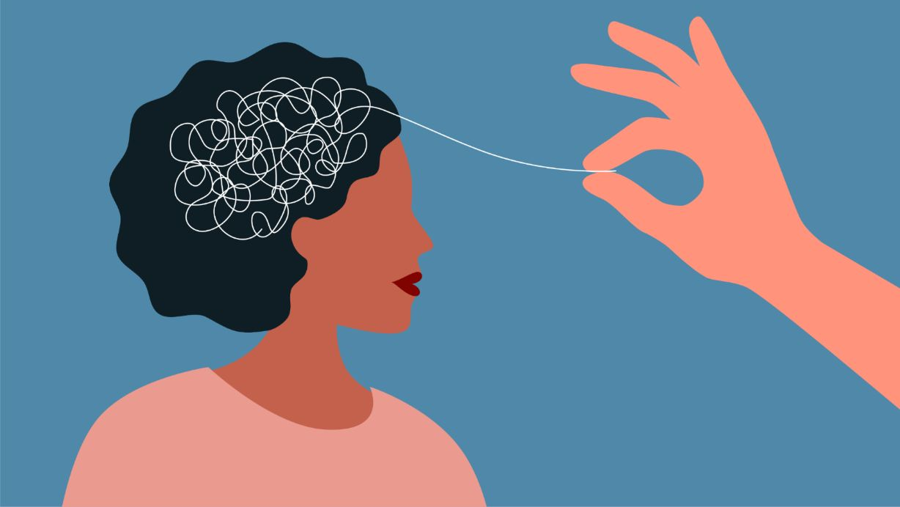
The model starts from a simple but consequential idea: that anxiety, in all its many forms, traces back to one of five core fears. Rather than treating each anxious symptom as its own isolated problem, Pressman's approach teaches clinicians to help clients dig down to that root fear and to the "chief defense" a person built, often in childhood, to protect against it. The twist, and the heart of the model, is that this defense inevitably backfires, reinforcing the very fear it was meant to guard against. Undoing that cycle, Pressman argues, is the real work of healing.
The stakes for getting this right are significant. Anxiety is now the most diagnosed psychiatric disorder in the United States, affecting close to one in five adults, a number Pressman notes has climbed well past depression's longtime lead. Americans spend hundreds of billions of dollars a year on anxiety-related costs, from medication to lost workplace productivity.
Over two prior Impact CE sessions (including a full three-day intensive) Pressman has walked clinicians through the theory, the exercises, and the questions that come up when practitioners try to apply this model to their own lives and their clients' most difficult cases. In his upcoming Premier Live Event, Deconstructing Anxiety: A Deeper Dive Into Understanding and Treating Anxiety Disorders, he'll go even further.
Below, a sampling of the insight he's already shared and a preview of what's ahead for those looking to attend his next deep dive into the subject and study of anxiety.
DECONSTRUCTING ANXIETY: A DEEPER DIVE
Q&A: Dr. Todd Pressman on the Roots of Fear and the Path to Fulfillment
A preview of the insight Dr. Pressman has shared in past sessions ahead of his upcoming Premium Live Event.
How do specific phobias fit into the Deconstructing Anxiety model?
DR. TODD PRESSMAN: "Any problem, any trauma, deconstructs down to a core fear. And we see what the defense is against it, do the opposite of the defense with the exercises, and we'd expect a phobia to resolve. In practice, of course, defenses come back, because we have a lifetime of habitual practice."
What about situations where people are victimized in reality — countless examples throughout history of anxiety based on real experience? How does that fit into a model where fear is described as a misperception?
"Imagine you are taking a walk in the woods. All of a sudden, you look down, you see the paw print of a bear. Suddenly you're living in a different reality — a scary reality... nothing scary has actually happened. It's all interpretation, perception... Even when the bear is upon you, certainly there is great pain. But the fear is still the anticipation of what that pain might lead to in the future."
Wouldn't the chief defense be some form of denial, with all other defenses growing out of that, like branches on a tree?
"I wouldn't say precisely denial is the foundation of all chief defenses, but avoidance — avoiding a fear, not dealing with it, or trying to control it — is the foundation of all defenses. Denial suggests I don't want to acknowledge the fear's existence. That is a defense, but other defenses acknowledge it and try to beat it up, or get control over it, in very direct, actually aggressive ways."
How does someone who's experienced trauma — like a war veteran with PTSD — fit into the five core fears?
"Let's imagine someone's been in a war and they have PTSD. Well, maybe their core fear is death, right? That would make sense. But maybe someone else says the reason I'm afraid of dying in a war is because I'll miss my loved ones — core fear of loss of love. And maybe somebody else says, I can't die yet, I have a great purpose to fulfill."
If I get off the chairlift and can't decide which path to take because I'm a perfectionist, should I pick impulsively, refuse to choose, or take the hardest path to break the fear?
"Whenever we have a decision to make... we want to become 100% willing to choose option A, and 100% willing to choose option B. Why? Because 100% willingness requires working through all the defenses, exposing all the fears, and coming to a place of complete objectivity. Fear creates a tunnel vision — it puts up blinders that have us only see a narrow slice of reality."
Would understanding chief defenses as "false" or "outdated" protection be an accurate way to think about them?
"Outdated? Absolutely. False — yes, but in the sense... I use the word faulty, faulty strategies. False might imply that they have no wisdom to them. But they do cultivate great qualities. They do protect us from our fear. We wouldn't keep using them otherwise. It's just not the perfect guarantee of safety, which life doesn't afford."
What about external constraints — like needing a better job, but the economy doesn't make that possible?
"We write our vision quest with a big eraser. We're willing to change, on a dime, what our commitment was, what our action step was. That's 100% willingness, right? I'm not trying too hard to use a defense to make sure my goal comes true — I'm 100% willing to take that action, and 100% willing to take a different action... It doesn't matter what the form is. It matters what the content is."
The Witness and the Warrior's Stance both involve "doing the opposite" — this is confusing to me. Can you explain the difference?
"The master key to healing is doing the opposite of the chief defense. That creates the exposure to the core fear that we're looking for. Every form of healing in therapy, I propose, is a form of doing the opposite of the chief defense. Of course, in most schools of thought, it's not talked about that way — but when therapy works, it's because there's been an exposure to what we had defended against, and a discovery that it's safe after all."
When working with clients, can we pick which of the three ways of "doing the opposite" to use — or do we need to use all three?
"There are endless ways to do the opposite... endless variations. Sometimes we don't know the right fear to face, and if we're not facing the core fear, we're not going to get the complete resolution of anxiety. With clients, you're going to want to design a unique program — everybody's unique, and that's the art of therapy."
How do you navigate a client who, in facing their core fear, starts to feel shame or guilt — like a survivor of domestic violence thinking, "If I'd faced this fear sooner, this wouldn't have happened to me"?
"The shame and the guilt are being used as defenses... choosing it to sort of punish ourselves as a strategy to say, if I punish myself enough, I won't want to do it again. In the midst of some really tough circumstances, no one should have anything but compassion for you — and that includes you. Instead of the shame or the guilt, which is functioning like a defense... that's gonna backfire. You're just adding pain to what's already causing so much suffering."
Ready to go deeper?
This is only a glimpse of what Dr. Pressman has shared in past sessions.
His upcoming Premier Live Event, Deconstructing Anxiety: A Deeper Dive Into Understanding and Treating Anxiety Disorders, will take these concepts even further, with live exercises, real-time case work, and extended time for the questions that matter most to your practice. ◼
104578 Deconstructing Anxiety: A Deeper Dive Into Understanding and Treating Anxiety Disorders
This workshop will provide a deep dive into treatment-resistant anxiety, helping to uncover the root causes of anxiety in even your most challenging clients. You will learn techniques for releasing the resistances that keep the anxiety alive, getting at their source and transforming them into a sense of high purpose and meaning, yielding powerful change and lasting results. With the...
Want to make the most of everything Impact CE has to offer?
The Ignite Membership unlocks unlimited live webinars, hundreds of self-paced courses, a growing library of recorded content, and free e-library access — all in one place, for one low annual price. Learn more about Ignite today.