Practice What We Teach
Why Support Professionals Need Their Own Advice
“Somewhere along the way, our profession quietly taught us that being exhausted was a badge of honor.”
Behavioral health professionals spend their days helping other people do hard things. They teach clients to name what they feel, to set limits, to ask for support, and to treat themselves with the kindness they extend so easily to others. It is expert, daily, practiced work. It is also work that clinicians are often remarkably slow to apply to their own lives.
Last fall, Sarah Buino, LCSW, RDDP, CADC, NMT, founder of Head/Heart Therapy and host of the podcast Conversations With a Wounded Healer, led "Beyond Self-Care: Tending to the Wounded Healer." This summer, LaTasha Matthews, an LPC and the CEO and clinical director of Illumination Counseling and Coaching, presented "The Cost of Caring: An Ethical Wake-Up Call for Clinician Wellness."
Matthews approached the question through ethics codes and licensing boards, and Buino approached it through motivation, trauma, and the systems clinicians work inside. Two different presentations that touch upon the same subject, both arrived at the same place: the knowledge clinicians give away every day is the knowledge they most need to use on themselves.
The Advice Clinicians Give (and the Advice They Skip)
Matthews began with the sentence many clinicians have said, and heard, more often than they would like to admit. "We tell ourselves, I'm good. I'm fine," she said. "Until one day we're not." From there she named the belief that keeps the cycle going:
"Somewhere along the way, our profession quietly taught us that being exhausted was a badge of honor. The overbooking meant we are committed. The sacrificing ourselves meant we are ethical. But I want to challenge that belief today. What if neglecting ourselves isn't evidence of dedication? What if it's an ethical issue? Because a dysregulated clinician cannot consistently co-regulate with others, and an emotionally depleted therapist cannot sustain or offer any emotional presence."
She was just as clear about what she was not offering. "Today isn't about bubble baths or taking another trip," she said. "It's not about self-care checklists." The point, in her words, was "looking honestly at the hidden costs of caring for everyone else while quietly abandoning ourselves."
Buino framed the stakes as bigger than any one clinician's comfort. "Today is a call to action," she told her audience, adding that "we have an opportunity to evolve our profession in a way that's going to be profoundly influential for the future of mental health, truthfully. But we're not going to be able to do that if we are not well."
When Knowing Better Isn't Enough
Matthews asked her audience whether choosing not to care for yourself is automatically an ethical violation -- her answer was no. The violation, she explained, lies in failing to notice and address impairment, and the ethics codes say as much in their language about monitoring one's own effectiveness, seeking consultation, and refraining from practice when compromised.
"Failure to address impairment is an ethical violation."
She illustrated how it plays out with a licensed social worker disciplined by a state board after stress, burnout, and substance use affected her competence. As Matthews told it, the story was an ordinary one: a caseload that never shrank, missed appointments, distracted sessions, and consultation that never happened. A composite case she called 'Renee' showed the same drift at an earlier stage. Renee runs past the end of sessions, lets clients text between appointments, falls behind on notes, and waives late-cancellation fees while telling herself, "I understand what they are going through." Each choice is generous on its own, sure, but combined, Renee's choices describe a clinician running on an empty tank.
The another sobering example was clinical:
"If I am exhausted and burned out and fatigued and numbed, when my client comes in that is talking about suicidal thoughts and ideation, and they've talked about it 10 other times, this one time that they talk about it sounds just like the other times... so I'm probably not going to assess for it. I'm too tired to assess for it. And then, I miss it."
Matthews also identified money as a quiet source of trouble. "Most of the ethical violations I've seen don't deal with sex," she said. "We struggle with financial boundaries." Taking on more clients is an understandable response to financial pressure, she acknowledged, but she asked whether a clinician can sustain it "without harming myself and my client." Her own answers were practical: scheduling rules that keep a new client from landing in the first or last slot of the day, a realistic daily caseload, and income that does not rely only on face-to-face hours.
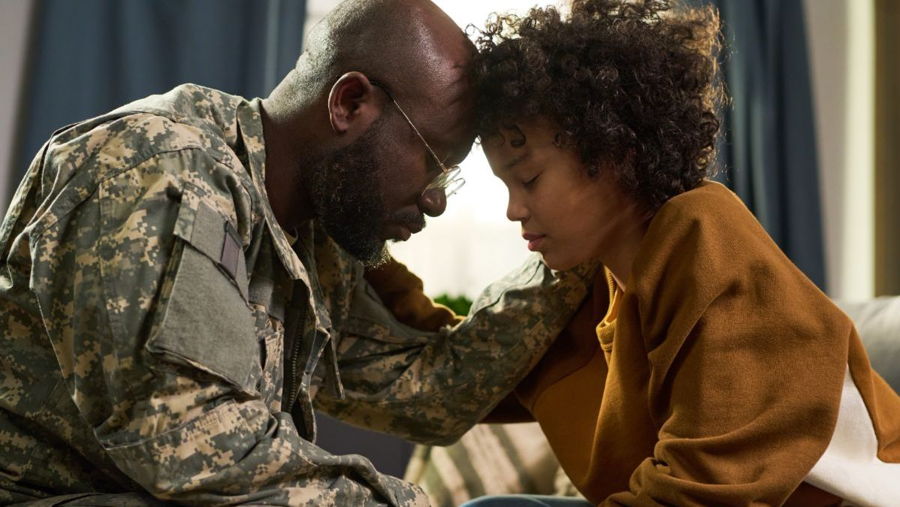
104751 Mental Health and the Military: Cultural and Clinical Considerations for Treating Veterans With PTSD and Related Conditions
This course is designed to provide an overview of military culture and how military culture impacts clinical practice with veterans and military personnel. A review of effective treatments for posttraumatic stress disorder (PTSD) and related conditions will be reviewed as well as other related clinical issues such as nightmares and insomnia. Psychological and pharmacological treatments reviewed will focus on those...
Why Helpers Can be the Hardest Clients
If clinicians know better, why don't they do better?
Both presenters, Matthews and Buino, traced the answer upstream, to why people become helpers in the first place. Matthews described the roles many clinicians learned in their families of origin: the responsible one, the caregiver, the peacemaker, the fixer, the invisible child. "The therapy room doesn't just hold your client's story, it holds yours too," she said. "And when we don't examine where we learn to care, we risk carrying more than we should."
Buino explored the same territory through motivation, and she was candid about her own. She said several of the less flattering reasons people enter the field, such as wanting to be revered or hoping to heal one's own family through a client, had applied to her at some point. Her concern was what happens when those motivations go unexamined:
"We can actually cause harm if we are unconsciously using our clients to meet our needs. There's definitely no problem with the secondary gain of feeling good about helping somebody. But when these things are working in the shadows, we all know that our shadow parts can come out sideways if we're not really conscious about them."
She described supervising a younger clinician who told clients they could text him anytime, then answered at all hours to prove he was a good therapist. It was a familiar picture of the helper who cannot say no.
Neither presenter offered this as an indictment, as Buino was direct that the goal is awareness, not self-punishment: "I want it to become conscious, but I don't want it to be something that you beat yourself over the head with."
Assessing Yourself the Way You Would Assess a Client
Once a clinician is willing to look, the next skill is precision. Matthews described burnout as cumulative, often eased by a vacation or a change of job, and compassion fatigue as persistent and subtle: "the slow boil."
Buino separated burnout, secondary traumatic stress, and compassion fatigue, and explained why the distinction is clinical rather than academic:
"The only reason that it's important to differentiate these things is to make sure that you're applying the right intervention to yourself. So if you're experiencing existential concern about your purpose and meaning, then taking a bubble bath is not the thing that you need to do in order to help yourself, right? We just need to identify what the problem is so that we can apply a solution that might be helpful."
It is the same reasoning clinicians use every day, turned inward. Even a healthy habit can serve different purposes. Buino used exercise as an example: "It's our relationship with something, right? Am I using exercise to sort of numb out…" or to support actual care?

104715 Caring for the Sickest Patients Without Burning Out: Boundaries, Bias, and Clinical Sustainability
Caring for patients with complex medical conditions, particularly those in the ICU and other high-acuity settings, requires clinicians to routinely make difficult decisions while balancing safety, function, quality of life, and system pressures. These environments place clinicians at increased risk for burnout, compassion fatigue, and moral distress, which can negatively affect clinical reasoning, team dynamics, turnover rates, and patient outcomes....
Matthews offered a self-monitoring check-in system, built from four questions:
- What is my current emotional, mental, and physical state?
- Is it affecting my boundaries or decisions?
- Am I practicing within my capacity?
- Do I need consultation, supervision, or a change to my schedule?
Looking Beyond the Individual
Buino pushed her audience to ask how much of clinician distress is personal at all. She drew the question from the book Healing Justice: who does resilience serve? "A lot of our wellness models have been focusing on the individual responsibility instead of recognizing that we need to challenge some of the systems that don't promote our well-being," she said.
"We can't ask ourselves or our clients to simply just adapt to unhealthy work environments or systems because it can create harm. We want to build discernment to support people in when we need to adapt and when we need to try to advocate and change systems."
She illustrated with her husband, a social worker who was worn down by the belief that his job was to meet every client's needs, from housing to food. When Buino asked what he was telling himself the job was, he realized he had been absorbing pressure for problems rooted in systems he did not create. His job, she suggested, was to connect people to resources. Moral injury, which occurs when professionals must act against their values because of insurance rules, funding changes, or profit-first structures, works the same way. The remedy begins with accurate attribution.
Her continuum of care made the argument visual. Self-soothing offers comfort or distraction, such as streaming a show or taking a bath. Self-care supports meaning and growth, such as therapy, medical care, and boundaries. Community care, in her words, consists of "workarounds for systems that don't inherently support care," while structural care is the set of systems underneath it all.

103366 Addressing Burnout in the Behavioral Health Workforce Through Organizational Strategies
This publication discusses how to address multiple aspects of work place burn out at the organizational level. Details are provided regarding organizational-level interventions that can be used to prevent and reduce burnout. Special emphasis is placed on strategies to improve workplace culture and climate.
**This course is based on the reading online article, Addressing Burnout in the Behavioral Health Workforce...
Support, Self-Compassion, and Rest
If wellness is an ethical matter, then support is infrastructure, not a favor.
Matthews put consultation at the center of sound decision-making. She recalled her early years as a "baby therapist," facing a client situation at the end of the day that left her anxious about what she was allowed to do. A quick consultation clarified what the law permitted. She documented, respected the client's autonomy, and moved forward knowing she had not carried the decision alone.
Buino turned to self-compassion, drawing on Kristin Neff's work, and distinguished it from what clinicians often assume it to be.
"We're practicing goodwill, not good feelings. So we are not trying to make bad feelings go away, we're just trying to hold loving space for ourselves when the bad feelings are there."
It is not self-pity, because it emphasizes connection rather than separation, and it is not self-indulgence, because it builds the capacity for growth. She also pointed to SAMHSA's Eight Dimensions of Wellness as a reminder that flourishing spans many parts of a life, and offered a caution clinicians who treat wellness as an achievement are likely to recognize: "it's not a game, right? It's not a competition, right?"
Matthews arrived at the same ground from the ethics side. Her closing "permission slip" invited clinicians to care deeply without carrying everything and to set boundaries without guilt. "Rest is a birthright," she said. "We don't earn rest."
Practicing What We Teach
Each presenter anchored the argument in a moment when her own advice caught up with her. Matthews described a stretch of supporting a close friend and then a parent through serious illness while continuing to see clients. She began to notice lapses in memory and focus. Her therapist told her she was impaired and needed a plan to step away from seeing clients. Matthews was angry, then grateful. The leave she took, she said, protected her clients and herself.
Buino described entering treatment in 2020, afraid of what others would think and of letting people down. The reactions she received were consistent. "All the people that I told said, I'm so glad you're taking care of yourself," she said, and she has since supported other therapists in seeking treatment of their own.
Both made the same request of the profession, in nearly the same words. Buino put it plainly:
"We have got to practice what we teach. This has to start being the norm in our field."
Matthews closed on the person behind the license. "If you don't get anything else from this time," she said, "it's that you matter, period." ◼
Want to make the most of everything Impact CE has to offer?
The Ignite Membership unlocks Premium events and Masterclasses, Unlimited Live Webinars, Hundreds of Self-Paced Courses, a Growing Library of Recorded Content, and Free E-Library access — all in one place, for one low annual price. Learn more about Ignite today.