Stem Cells, PRP, and Beyond
Do Orthobiologic Injections Actually Work? A PT Weighs In.

"There's a significant patient misperception that stem cells regrow a joint's cartilage."
104649 Stem Cells, PRP, and Beyond: A Rehabilitation Professional's Guide to Regenerative Medicine
From platelet-rich plasma to stem cell therapies to viscosupplementation, non-surgical treatment options for osteoarthritis and tendinopathies are becoming increasingly common. As a rehabilitation professional, you do not need to administer these treatments, but you do need to understand them. Knowing what your patients have received, what the evidence says, and how to guide their rehabilitation around these interventions is quickly...
In my upcoming webinar, "Stem Cells, PRP, and Beyond: A Rehabilitation Professional's Guide to Regenerative Medicine", I will provide the latest evidence-based information on the effectiveness of regenerative medicine orthobiologics (platelet-rich plasma (PRP) and stem cells), in the treatment of osteoarthritis.
This is a topic I've experienced personally and have a keen professional interest in sharing, drawing on over three decades of orthopedic clinical and educator experience.
I also have a unique personal background in this area: I've gone through regenerative medicine therapy myself and later went on to have a left total knee and a right total hip arthroplasty. This upcoming webinar is extremely timely and has enormous clinical impact, because osteoarthritis is one of the most common causes of functional disability throughout the world, and current medical model treatments are, at best, mediocre.
As clinicians, the question we always hear is along the lines of:
Do these injections actually work?"
"Are they worth the money?
Those two questions are difficult to answer, given the growing misinformation, the fact that most orthopedic surgeons don't support the use of these injections at all (or as a first treatment option), and the fact that others in the alternative regenerative medicine field are making exaggerated claims (often backed by celebrity endorsements) about their effectiveness.
Specifically, when comparing PRP to mesenchymal stem cells, most of the evidence over the last couple of years demonstrates a positive treatment response for knee osteoarthritis versus traditional methods such as cortisone injections or hyaluronic acid — but only when the following key treatment factors are implemented:
The Key Factors That Make or Break Treatment
- Dosing. PRP injections need to be dosed significantly higher than what's typically done — the platelet count needs to be at least 2–3 times the typical dose. This is the most common flaw I see, and the treatment effect is so dependent on proper dosing that it continues to amaze me how often practitioners underdose. A great way to think about this: what kind of treatment effect would you expect if you only took 25% of a medication your doctor prescribed? Stem cells carry a similar flaw, with inconsistent dosing, varied preparations, and inconsistent cell concentration and purity.
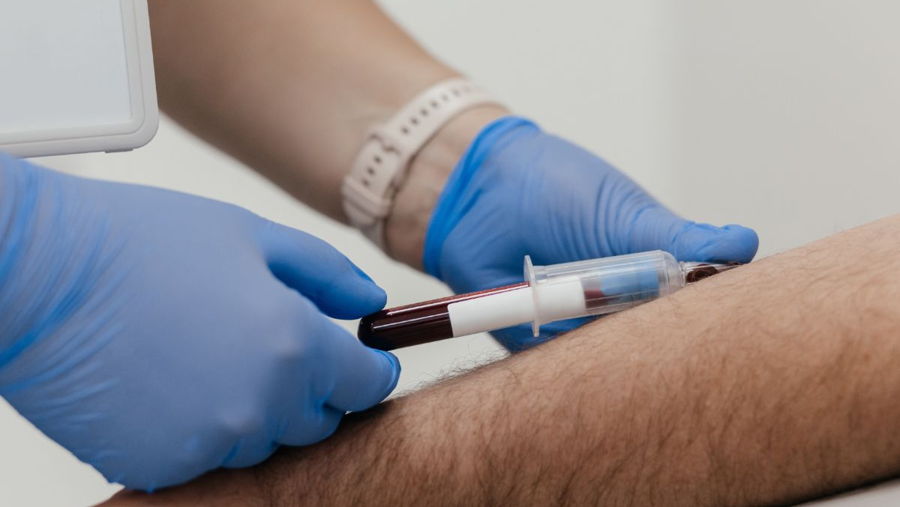
- Processing. The kit used to process the blood draw needs to use a double-spin method to achieve a higher concentration of platelets before injection.
- Booster injections. An additional 2–3 booster injections are recommended.
- Injection accuracy. Accuracy differs significantly depending on whether the provider uses landmark guidance or ultrasound guidance. Ultrasound guidance reaches the correct spot 93–95.4% of the time — the physician can watch the needle go directly into the joint space on a screen. Landmark guidance, by comparison, is only 78–82% accurate, meaning roughly one in five landmark-guided injections miss the joint cavity entirely.
- Post-injection rehab. Rehab must follow a specific, time-based protocol to optimize the injection's effectiveness — and right now, post-injection rehab instructions are all over the place. (Feel free to reach out to me directly for those specifics!)
My number one recommendation to rehab clinicians who are asked about orthobiologics for knee osteoarthritis is simple: educate your patients, and educate them well.

104657 Clinical Management of Concussion: Assessment, Rehabilitation, and Return to Activity
Concussion management has evolved significantly over the past decade, with growing evidence supporting early, individualized, and active rehabilitation over prolonged rest. This two-hour, evidence-based course is designed to provide rehabilitation professionals with the knowledge and clinical tools needed to confidently assess, treat, and guide patients through every stage of concussion recovery. Participants will explore the pathophysiology of concussion, current clinical...
What Patients Need to Understand
PRP is most effective for pain management in mild to moderate knee osteoarthritis. Stem cells are used far less often than PRP for osteoarthritis. PRP works best when the knee still has decent cartilage remaining — if joint damage is too severe, the injection cannot undo bone-on-bone friction at the very end stages.
Clinical studies show that PRP and bone marrow stem cell injections often provide similar levels of pain relief for standard osteoarthritis; because PRP is simpler, safer, and cheaper, doctors usually recommend it first.
Why Stem Cells Cost More (Without Outperforming PRP)
Stem cell orthobiologics are more expensive and significantly more labor-intensive than PRP treatment. Preparation and processing take 3–5 times longer with a stem cell injection, and that additional labor time is a major factor behind the significantly higher cost of stem cells versus PRP.
As demonstrated by high-level research over the past couple of years, stem cells have not consistently been shown to be more effective than PRP, despite the greater cost. Personally, I believe there's a significant patient misperception that stem cells regrow a joint's cartilage, and that this misperception is what drives the belief that stem cells are superior to PRP. In reality, the effectiveness of both PRP and stem cells on improving joint structure remains unclear.

104747 Surgical Approaches in Shoulder Arthroplasty - Procedures Guidelines
This online webinar introduces key indications for shoulder arthroplasty, essential pre‑operative patient assessment, and clear differentiation between TSA, reverse TSA, and hemiarthroplasty. Participants will also review common complications to strengthen clinical decision‑making and patient management.
PRP vs. Cortisone: A Safety Trade-Off
PRP is also a safer alternative to cortisone injections in mild to moderate stages.
Cortisone can actually accelerate the problem: landmark studies have shown that patients receiving repeated cortisone shots lose significantly more cartilage volume over time than those receiving a simple saline placebo. That said, while PRP has a vastly superior long-term safety and structural profile, it does have two main downsides compared to cortisone: first, it's not covered by insurance, and second, PRP's treatment effect takes 4–6 weeks to appear, versus the immediate pain relief of a cortisone injection.
PRP and stem cells aren't covered by insurance because the treatment factors above have yet to become standardized, and these treatments continue to be labeled "experimental." Out-of-pocket costs vary significantly by region. For example, the cost of a PRP injection ranges from $700–$2,000 in the western U.S., versus $500–$600 in the South. For stem cells, the range out west can be $3,000–$6,000, versus $2,000–$3,000 down south.
The Real Gap: No Standard for Post-Procedure Rehab
My second, and most important, recommendation (especially for us as rehab professionals) is this: there are currently no established guidelines for post-procedure biologic therapies in musculoskeletal rehab.
Post-procedure protocols are all over the map. As I've mentioned, I bring both personal procedure experience and extensive study of the literature to this topic, combined with practical experience rehabilitating patients following PRP or stem cell injections in the hip, knee, and shoulder, everyone from schoolteachers to professional golfers. My presentation comes from that heightened vantage point.
In conclusion, I feel very confident saying that rehab clinicians who attend my webinar on orthobiologics will meaningfully enhance their understanding of the science, the clinical applications, the do's and don'ts, and (most importantly) gain the knowledge to guide patients through the stages of post-injection rehabilitation. Having this knowledge gives today's clinician the tools to maximize outcomes beyond what's currently reported in the literature. ◼
104649 Stem Cells, PRP, and Beyond: A Rehabilitation Professional's Guide to Regenerative Medicine
From platelet-rich plasma to stem cell therapies to viscosupplementation, non-surgical treatment options for osteoarthritis and tendinopathies are becoming increasingly common. As a rehabilitation professional, you do not need to administer these treatments, but you do need to understand them. Knowing what your patients have received, what the evidence says, and how to guide their rehabilitation around these interventions is quickly...
Want to make the most of everything Impact CE has to offer?
The Ignite Membership unlocks Premium events and Masterclasses, Unlimited Live Webinars, Hundreds of Self-Paced Courses, a Growing Library of Recorded Content, and Free E-Library access — all in one place, for one low annual price. Learn more about Ignite today.
References
1.American Academy of Orthopedic Surgeons Technology Overview Summary: Platelet-Rich Plasma (PRP) for Knee Osteoarthritis. JAAOS.2024 April 1: Vol 32, Issue 7
2.Khalilizad M et al. Comparative efficacy of different doses of platelet -rich plasma injection in the treatment of knee osteoarthritis: a systematic review and network meta-analysis. J of Ortho Surg and Res. 2025. Mar (20) :221
3. Guermazi A et al . Debate : Intra-articular steroid injections for osteoarthritis -harmful or helpful? Osteo and Imaging. 2023;3:100163
4. Si-Hyeong Park S et al . Efficacy of intra-articular injections for the treatment of osteoarthritis: A narrative review. Osteoarth Cartil Open .2025. Mar 5;7(2):100596
5 . Obaid A et al . Platelet-Rich Plasma and Stem Cell Therapies for Musculoskeletal Rehabilitation: Current Evidence on Dosing, Activation, and Functional Performance. Ortho Rev.2026:16 doi:1052965100
Opinions and viewpoints expressed in this article are the author's, and do not necessarily reflect those of CE Learning Systems.