The Social Worlds of Drugs and Recovery
The friendships, rituals, and identities addiction can build (and what it takes to rebuild them in sobriety).

"They may not simply be using a drug. They may be participating in a culture."
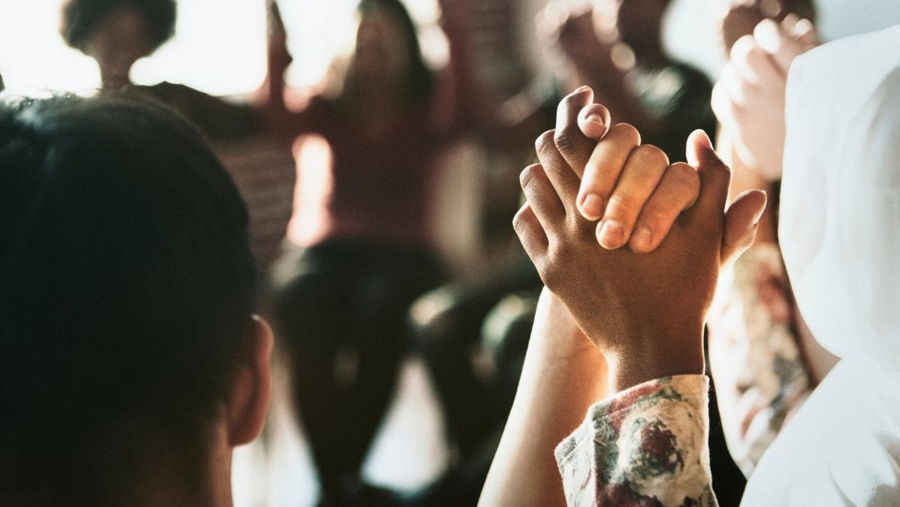
104745 Drug Culture & Recovery Culture in American Society
This course explores drug culture and recovery culture within the broader context of American society. Participants will examine how culture, belonging, identity, social roles, and relationships can shape substance use and recovery. The course also offers practical ways for psychology professionals to consider a client’s cultural and social world in assessment and treatment.
Imagine someone who has decided they want to stop using drugs. They’ve struggled back and forth, cutting down, quitting, picking it back up, and living with an exhausting inner conflict. This time, something feels different. They know on a deep level that the substance is harming their health, relationships, work, and even their ability to function on a daily basis. They are done.
But now it’s Friday night.
By 9 p.m., their phone is blowing up with a group text about plans. There is an expected, comforting routine in play: going to their places, listening to their music, talking the way they talk when it’s just them. They have a trusted ringleader who always makes everyone laugh, tells the stories of old times, and knows where to go to…keep the party going.
And the ringleader really wants to get sober.
Drug use that develops into addiction can be an extremely isolating experience. Some people withdraw almost completely from others. For others, though, substance use becomes part of an entire social world filled with long-term friendships, routines, roles, language, and a way of life that becomes intertwined with identity. In other words, a person may not simply be using a drug. They may be participating in a culture.
When that person seeks recovery, they may be moving toward something that can dramatically improve their life while simultaneously leaving parts of a life behind. Ignoring the meaningful or supportive qualities of those social worlds can cause us to miss something that may be vital to beginning, sustaining, and actually living in recovery.
People do not use drugs—or recover from drug addiction—in a cultural vacuum. We all live inside social worlds that shape what we value, what we fear, how we define success, where we find belonging, and even what feels normal. Drug cultures and recovery cultures develop their own social worlds, but they also exist inside a much larger one: American society.
From a sociological perspective, we seek to understand health first by zooming out. Rates of addiction very widely from community to community. Why? Underlying conditions and culture are our petri dish, and it can breed good or poor health in our populations. Addiction has biological, psychological, behavioral, and trauma-related dimensions, but it also develops within social conditions. Economic instability, housing and food insecurity, discrimination, isolation, chronic stress, and unequal access to opportunity can shape physical health, mental health, and substance use. Sociologists sometimes describe this process as society “getting under the skin”: our environments create stress responses and wear and tear that accumulate over time.
American culture also sends us strong messages about how life should work. We place enormous value on individual responsibility, independence, productivity, achievement, and consumption. We are surrounded by standards for what success should look like, sometimes right down to what we ourselves should look like. Through socialization, technology, and media, American society can generate powerful experiences of comparison, alienation, and disconnection while encouraging us to view the management of those experiences primarily as our individual responsibility.

104655 The Roots of Rhythm and Somatic Songwriting: The Healing Power of Music
We are all connected, and rhythm is a thread that holds us and our world together. This workshop begins with an exploration of the power of rhythm as a tool for healing and regulation, particularly in managing the trauma response. Rhythm is universal. Participants will explore the origins of rhythm and its connection to regulation. Rhythm is deeply embedded within...
Individual agency matters. People make choices and influence the direction of their lives. But they exercise that agency inside environments that may be supportive, constricting, draining, unequal, or traumatic. Combining perspectives of agency and social structure enable us to see the fuller picture.
A core aspect of societies and groups is culture. often think about culture in relation to race, ethnicity, religion, or nationality, but sociologically, culture is much broader. It includes the shared values, beliefs, behaviors, language, rituals, objects, stories, symbols, and unwritten rules through which groups make sense of the world. We participate in multiple cultures throughout our lives: family cultures, workplace cultures, religious communities, sports cultures, music scenes, professional groups, and social circles.
Drugs have cultures, too.
Drug cultures differ greatly by substance, geography, class, generation, social group, and time period. But they can still have recognizable language, rules, rituals, stories, roles, symbols, and markers of status. Most importantly, cultures help organize some of our basic human needs. They can provide belonging, identity, competence, safety, routine, status, connection, and meaning.
Think about a music scene where marijuana use is common. For some people, smoking and edibles may become intertwined with concerts, festivals, friendships, clothing, art, particular genres of music, and a broader identity around creativity, relaxation, or being part of a scene. The social benefit is not simply intoxication. Someone may have people to spend weekends with, activities to anticipate, rituals around listening to music, and a sense of belonging.
Now imagine that use begins causing problems and the person decides to stop. They may still love the music, festivals, creativity, late-night conversations, and feeling of being part of something. They may seamlessly continue participating in the culture if sober. But the drug may be integral to the entire social group. If recovery is framed only as removing the drug and ideally removing triggers—places, people and things strongly associated with it—we may unintentionally ask the person to surrender much more than the substance.
Recovery programs and lifestyles have cultures too.
104744 Navigating Countertransference During Difficult Times
When our sociopolitical environment is acutely challenging, both therapist and client may be navigating the same internal and external crises. Within the context of global stress, countertransference may be heightened. Objective neutrality can be complicated by our shared human experience of fear, anxiety, and a loss of our sense of safety. Threats to our emotional, social, moral, and physical safety...
If the meaningful parts of the drug culture can be preserved or rebuilt, and if there are parallels drawn from drug to recovery cultures, the transition to sobriety might look and feel different. More familiar even. That person might attend concerts with sober friends, play music themselves, volunteer at events, join a creative community, or develop new rituals around an interest that was never inherently the problem. There could be meditation and spiritual groups that provide similar perspectives or ideologies. They could remain a part of festivals and events by affiliations with recovery groups present. The goal does not have to be erasing the former life that was the scaffolding of drug use. It may be separating important human needs that were met, and valued parts of that life, from the substance that ultimately become unmistakably harmful.
A very different drug culture might develop around opioids. Someone embedded in an enmeshed social network may spend large amounts of time with people who exchange information and resources, provide transportation or companionship, protect one another, or simply understand experiences that outsiders do not. The environment may carry enormous risk and cause profound harm while still containing genuine relationships and loyalty.
That person may also hold a meaningful role. Perhaps they are exceptionally good at finding resources, reading people, solving problems under pressure, or helping others navigate difficult situations. When they enter treatment, we may understandably focus on the drug itself and the dangers surrounding its use. Yet they may also be leaving behind a daily routine, a social network, a role, an identity, and a world in which they possessed valuable knowledge and status.
Understanding this does not romanticize addiction. It humanizes it. It acknowledges the real context and backstory of the person struggling.
It also changes how we might think about recovery.
Recovery is often described in terms of stopping or reducing use, managing symptoms, avoiding triggers, and changing behavior. These can all be critical. Recovery, however, may also involve leaving one cultural world and gradually entering or building another.
That transition can involve real loss. People may miss relationships, rituals, social roles, places, music, excitement, status, or simply the familiarity of knowing how a particular world works. A person can genuinely want recovery and still grieve pieces of the culture they are leaving.
This allows us to ask different questions. Rather than, “Why would this person go back to that environment when they know they’ll be triggered, that it will be bad for their sobriety?”
We could ask, “What would have to exist for leaving to feel possible? What are they heading towards that meet the needs provided by that environment?”
Recovery cultures are many, and the elements of those cultures, perhaps surprisingly, often mirror drug cultures. Twelve-step programs are perhaps the most familiar example of a recovery culture. Like any culture they contain language, shared stories, rituals, symbols, norms, values, mentorship, and social roles. Meetings create regular places to go. Sponsorship creates relationships. Service creates opportunities to contribute. Recovery anniversaries mark time and reinforce identity. Stories allow people to reinterpret their past and imagine a future.

104654 CBT for Depression: New Advances and Standard CBT Approaches
Major depression and other mood disorders are frequently encountered in clinical practice, and counselors and therapists often find these clients challenging for a number of reasons. Cognitive Behavioral Therapy (CBT), as an approach to treating depression first described and researched in the late 1970s and early 1980s, continues to be the gold standard for effective treatment of depression and has...
People may also build recovery through other means, such as peer-support communities, harm reduction, medication-assisted treatment, faith communities, secular groups, culturally specific organizations, families, wellness communities, or combinations of these. There is no single recovery culture that resonates or works for everyone seeking recovery.
What matters is whether a new social world can begin to provide some of what the former one did.
If drug use provided connection, where will connection come from now? If it provided ritual and daily structure, what new practices can take their place? If someone experienced status and competence in their former world, where can those strengths go? If the culture became part of identity, how can a broader identity develop?
Sometimes those answers are basic. The person who loves music can keep music at the center of life while changing how and with whom they experience it. Someone who became skilled at finding resources or protecting others may eventually thrive in peer support. A person who can read a room, tell a compelling story, organize people, or survive under enormous pressure does not lose those capacities in recovery. Those skills can be redirected toward mentorship, service, leadership, advocacy, or entirely new roles.
Not everything from the former social world has to be discarded.
As a medical sociologist and continuing educator, I analyze health and social conditions, connecting that big picture to how it affects the population affected and the population working on those issues professionally. In the world of promoting health and wellbeing, interventions targeting individuals who live in conditions where basic needs are not provided, have difficulty with effectiveness or scale. That’s not to say everyone experiencing addiction is lacking basic needs. It’s that we need our basic needs J. Food, shelter, water, connection, a sense of belonging.
Belonging is not just a great additive part of life. It’s a basic need.
If we are not getting our needs met from mainstream society or our social groups of origin, we’ll seek it out elsewhere.
So let’s get back to our ringleader on Friday night. Their phone is still lighting up. The old world is right there, ready and waiting, with its people, language, stories, music, routines, and familiar role.
If we hear only resistance or ambivalence, we may miss what is actually happening. This person may be standing between social worlds.
Perhaps one of the most important questions we can ask is not simply what this person needs to leave behind on the journey to sobriety.
It is what—and who—they might belong to next. ◼
104745 Drug Culture & Recovery Culture in American Society
This course explores drug culture and recovery culture within the broader context of American society. Participants will examine how culture, belonging, identity, social roles, and relationships can shape substance use and recovery. The course also offers practical ways for psychology professionals to consider a client’s cultural and social world in assessment and treatment.
Want to make the most of everything Impact CE has to offer?
The Ignite Membership unlocks Premium events and Masterclasses, Unlimited Live Webinars, Hundreds of Self-Paced Courses, a Growing Library of Recorded Content, and Free E-Library access — all in one place, for one low annual price. Learn more about Ignite today.
Opinions and viewpoints expressed in this article are the author's, and do not necessarily reflect those of CE Learning Systems.