On the Calendar: Observances in October
October is all about mental health, ADHD, physical therapy, and dental hygiene awareness
Every month, the calendar fills with moments worth pausing for.
October is one of the fullest months on the health calendar, so this special edition gives it the room it deserves. Mental Illness Awareness Week and World Mental Health Day, on October 10, put mental health at the center of the conversation. ADHD Awareness Month looks at how far our understanding of attention and neurodevelopment has come. National Physical Therapy Month celebrates a profession that began with wartime aides and now reaches settings from hospitals to schools to sports teams. And National Dental Hygiene Month honors the preventive work that supports total health. Each of these observances began with people who believed something deserved more attention, and each has a history worth knowing. For the clinicians, therapists, counselors, and care providers who show up for patients every day, they're worth a closer look.
At Impact CE, we believe continuing education is a powerful tool, not just for meeting licensure requirements, but for staying attuned to the populations and challenges that define modern practice. Learning doesn't stop at a certificate; it shapes how we show up for the people who need us most.
This October, we're spotlighting courses that speak directly to each of these awareness moments, giving practitioners practical, evidence-informed tools to bring back into their work right away. There's a lot to cover this month, so this special edition runs longer than most, with a section for each observance so you can head straight to the ones that matter most to your practice.
Mental Illness Awareness Week
In 1990, Congress established the first full week of October as Mental Illness Awareness Week, in recognition of the awareness work of the National Alliance on Mental Illness (NAMI). NAMI began in 1979 as a small group of families frustrated by the lack of public understanding and resources for people with serious mental illness. Since then, advocates across the country have used the week to host activities, large and small, that bring communities into the conversation, with the goal of ending stigma and advocating for treatment and recovery.
For behavioral health professionals, the week is a reminder of how much of the work happens before a client ever reaches the office. NAMI notes that there are often long delays, sometimes decades, between the first appearance of symptoms and the moment a person gets help. Closing that gap takes more than good clinical skills: it takes the conversations clinicians have in their communities, the way they talk with clients and families about seeking care, and a steady commitment to staying current on the approaches that help people get better.
World Mental Health Day
World Mental Health Day was first observed on October 10, 1992, at the initiative of Richard Hunter, then Deputy Secretary General of the World Federation for Mental Health, which was founded in 1948. It began as an annual activity of the federation, and in 1994 it took on a theme for the first time: "Improving the Quality of Mental Health Services throughout the World." With the support of the World Health Organization, it has grown into a global day of education, advocacy, and action against stigma. This year, it falls on Saturday, October 10.
The themes the day has taken up over the years trace how the field's own focus has widened: women's mental health, children, human rights, aging, culture and diversity, dignity, young people, and inequality. That progression is a useful reminder for practitioners that mental health is shaped by context as much as by symptoms. It also shows up in every clinical setting, from the therapy office to the PT clinic to the dental chair, so the day speaks to the whole care community and not just those who work in behavioral health.

104751 Mental Health and the Military: Cultural and Clinical Considerations for Treating Veterans With PTSD and Related Conditions
This course is designed to provide an overview of military culture and how military culture impacts clinical practice with veterans and military personnel. A review of effective treatments for posttraumatic stress disorder (PTSD) and related conditions will be reviewed as well as other related clinical issues such as nightmares and insomnia. Psychological and pharmacological treatments reviewed will focus on those...

103112 Mental Health Challenges of Lesbian, Gay, Bisexual, and Transgender People: An Integrated Literature Review
The authors of this literature review describe the evidence in favor of increased behavioral health problems amongst members of the LGBTQ+ community. Through a directed literature review, the authors describe the need for more access to behavioral health services amongst LGBTQ+ community members and the proactive steps that behavioral health providers can take to lower risk of further behavioral health...

103137 Digital Mental Health for Young People: A Scoping Review of Ethical Promises and Challenges
Researchers are attending to the behavioral health of young people and are wanting young people to have more access to behavioral health services. Digital applications/resources may provide some viable behavioral health treatment options to young people. This is a qualitative study of the challenges in the ethics and benefits of digital/electronic behavioral health services to young people. This course is...
ADHD Awareness Month
ADHD Awareness Month began in 2004, when a coalition of ADHD organizations, including the Attention Deficit Disorder Association (ADDA), CHADD, and the ADHD Coaches Organization, launched an October awareness campaign. ADDA also helped write the Senate resolution that established the first ADHD Awareness Day. The condition they set out to explain had a long road behind it. In 1902, British pediatrician Sir George Still described a group of children who struggled to sustain attention and control their behavior despite normal intelligence, and he framed it as an "abnormal defect of moral control." The diagnostic manuals then renamed and reshaped the condition over the next century. The DSM-II listed it in 1968 as "hyperkinetic reaction of childhood," a condition believed to fade by adolescence. The DSM-III called it attention deficit disorder, with or without hyperactivity, in 1980, and the DSM-III-R introduced the name ADHD in 1987. The DSM-IV added three types in 1994, and the current DSM-5 treats them as presentations that can change over a person's life.
That arc is worth remembering in 2026, because it shows how far the science has moved. In a little over a century, the field has gone from judging a child's character to understanding a neurodevelopmental condition with genetic and neurobiological foundations, and from assuming children outgrow it to recognizing that adults live with it too. The first articles on adult ADHD appeared in the late 1960s. For practitioners, the history is a useful check on the old assumptions that still circulate in waiting rooms, classrooms, and workplaces: that ADHD is laziness, a failure of willpower, or a failure of parenting. Our understanding is still evolving, and keeping up with it is part of how clinicians show up well for the children, teens, and adults who come to them.

103278 Emotion Dysregulation and Adult ADHD
Attention Deficit Hyperactivity Disorder (ADHD) is a developmental disorder, with an onset in childhood, that accompanies the person throughout their life, with prevalence between 3 and 5% in adults. Recent studies point towards a fourth core symptom of the disorder related to the emotional information processing that would explain the repercussions that ADHD has on the social, academic, and professional...

103271 Attention Deficit Hyperactivity Disorder
Attention-deficit/hyperactivity disorder (ADHD) is a common disorder most often diagnosed in childhood and adolescence. This systematic review updates and extends two previous Agency for Healthcare Research and Quality (AHRQ) reviews, compares the effectiveness of the methods used to establish the diagnosis of ADHD, examines pharmacologic and nonpharmacologic treatments, and evaluates different monitoring strategies used for children and adolescents through 17...

102324 Comparison Between Two Continuous Performance Tests for Identifying ADHD: Traditional Vs. Virtual Reality
ADHD is a common disorder affecting upwards of 7% of the school-aged children. While the use of questionnaires, combined with a detailed clinical interview, is one of the most common ways of diagnosing the condition, using questionnaires as the primary diagnostic tool is ripe for clinical inaccuracies. The use of Continuous Performance Tests (CPTs) has been shown to provide a...
National Physical Therapy Month
National Physical Therapy Month is led by the American Physical Therapy Association (APTA). It grew out of National Physical Therapy Week, established in 1981, and became a month-long October observance in 1992. The profession it honors has much deeper roots: Manual therapy, massage, and water therapy trace back to the ancient world and Hippocrates, but physical therapy as the United States knows it took shape during World War I, when "reconstruction aides" worked to rehabilitate wounded soldiers. Mary McMillan, who moved to the U.S. in 1917 and joined the Army Medical Corps in 1918 as one of its first reconstruction aides, went on to lead the aides at Walter Reed Hospital. In 1919 she wrote what is regarded as the first physical therapy text, Massage and Therapeutic Exercise, and in 1921 she founded the American Women's Physical Therapeutic Association, which became the APTA in 1947.
What began as a corps of wartime aides is now a profession practiced in hospitals, outpatient clinics, home health, skilled nursing facilities, schools, and on sports teams. October is a chance to recognize the physical therapists, physical therapist assistants, and students doing that work, and to remind the public that the benefits of physical therapy reach well beyond injury recovery. For clinicians, the profession's history is also a reminder that its growth has always come from learning. The field has kept expanding what it can do for patients, and staying current is how each generation of practitioners carries that forward. For the occupational therapists, massage therapists, athletic trainers, and other hands-on colleagues who work alongside PTs, the month is a good moment to recognize the shared work of helping people move, heal, and live well.

104656 When Touch Meets Trauma: A Nervous System Approach to Trauma-Informed Care for Allied Health Professionals
For physical therapists, occupational therapists, athletic trainers, massage therapists, and other allied health professionals, touch is a primary clinical tool. Yet for a significant portion of patients, physical contact carries a complex history. Trauma stored in the body does not disappear when a patient enters the treatment room. It can present as bracing, guarding, emotional flooding, dissociation, or treatment resistance....

104657 Clinical Management of Concussion: Assessment, Rehabilitation, and Return to Activity
Concussion management has evolved significantly over the past decade, with growing evidence supporting early, individualized, and active rehabilitation over prolonged rest. This two-hour, evidence-based course is designed to provide rehabilitation professionals with the knowledge and clinical tools needed to confidently assess, treat, and guide patients through every stage of concussion recovery. Participants will explore the pathophysiology of concussion, current clinical...
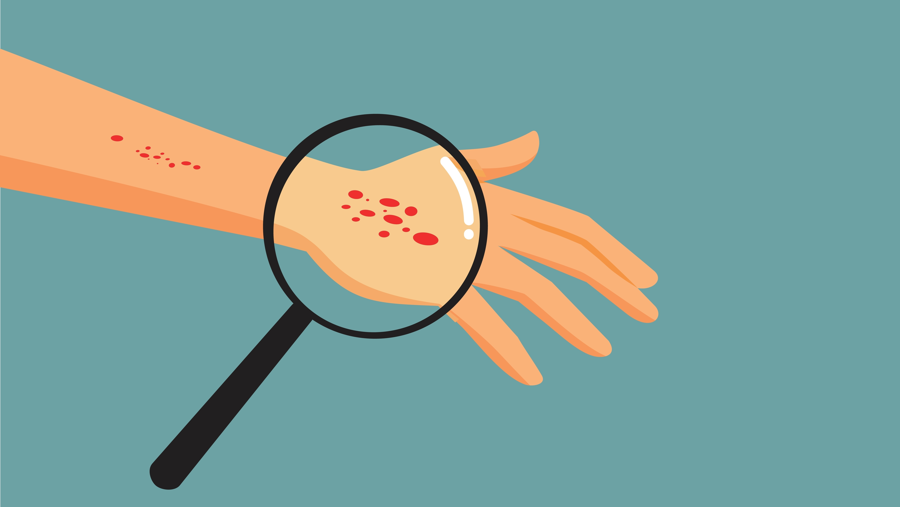
104461 Massage Therapy and Pathology: Common and Contagious Skin Conditions
Massage therapists work closely with the skin, so it is vital to be well-informed about common and contagious skin problems. This class covers the definition, demographics, pathophysiology, signs and symptoms, treatment options, and role of massage for the following: herpes simplex, staph infections (including MRSA), psoriasis, dermatitis/eczema, and skin cancer.
**This course is based on the recorded webinar, Massage Therapy...
National Dental Hygiene Month
National Dental Hygiene Month is led by the American Dental Hygienists' Association (ADHA), and it grew out of earlier week-long celebrations of the profession. The profession itself began in Bridgeport, Connecticut, where dentist Alfred Fones trained his cousin and assistant, Irene Newman, in 1907 to scale and polish patients' teeth, making her the first dental hygienist. In 1913, Fones opened the first dental hygiene school in Bridgeport. In 1917, Connecticut became the first state to pass a dental hygiene licensure law, and Newman became the first licensed dental hygienist. The ADHA followed in 1923, giving the growing profession a national organization.
Today, the ADHA describes dental hygienists as preventive oral health professionals who provide educational, clinical, and therapeutic services that support total health. October is a chance to recognize that work and to remind the public that oral health is part of overall health. It's also a moment for the whole dental team to reflect on what preventive care looks like in practice. Hygienists often see the same patients regularly over many years, and that continuity creates a chance to notice small changes early, ask better questions, and educate patients and families before small concerns become bigger ones. For a growing dental community, continuing education is how that preventive mindset keeps pace with what the science learns about the mouth's connections to the rest of the body. ◼

104746 The Skinny on Weight-Loss Medications and Oral Health: An Evaluation of Ozempic, Mounjaro, Wegovy, and Other GLP-1 and GIP Medications for Dental Health-Care Professionals
An increasing number of people are using glucagon-like peptide-1 receptor agonists (GLP-1 RAs) and glucose-dependent insulinotropic polypeptide receptor agonists (GIP receptor agonists) for both glycemic control and weight loss. These medications are often referred to as “incretin mimetics,” and they target physiologic processes involved in dysglycemia, nutrient metabolism, and nutrient storage. Given the relative novelty of this drug class, it...

104757 Don't Take It On The Run, Baby! Illicit Drugs, Licit Drugs Used Illicitly and Management of Substance Use Disorder
This program provides dental professionals with the tools to recognize the oral and behavioral manifestations of substance use disorder (SUD), manage treatment safely and compassionately, and navigate the complexities of care coordination, relapse risk, and stigma.

104750 Decoding Myofunctional Disorders: Causes and Effect
Unintentional patient reactions, such as lip clenching or gagging, can pose challenges during dental procedures. This course explores how myofunctional issues may contribute to these involuntary behaviors. Orofacial Myofunctional Disorders (OMDs) often originate from patient habits or conditions that manifest during infancy, potentially disrupting healthy function and persisting throughout a person’s lifetime. These disorders can contribute to reactions that complicate...
Want to make the most of everything Impact CE has to offer?
The Ignite Membership unlocks Premium events and Masterclasses, Unlimited Live Webinars, Hundreds of Self-Paced Courses, a Growing Library of Recorded Content, and Free E-Library access — all in one place, for one low annual price. Learn more about Ignite today.