“This Isn’t for Me”
Introducing Body-Based Work to Skeptical Clients

"I stopped trying to turn skeptics into believers. Now I try to build a bridge from where they already are."
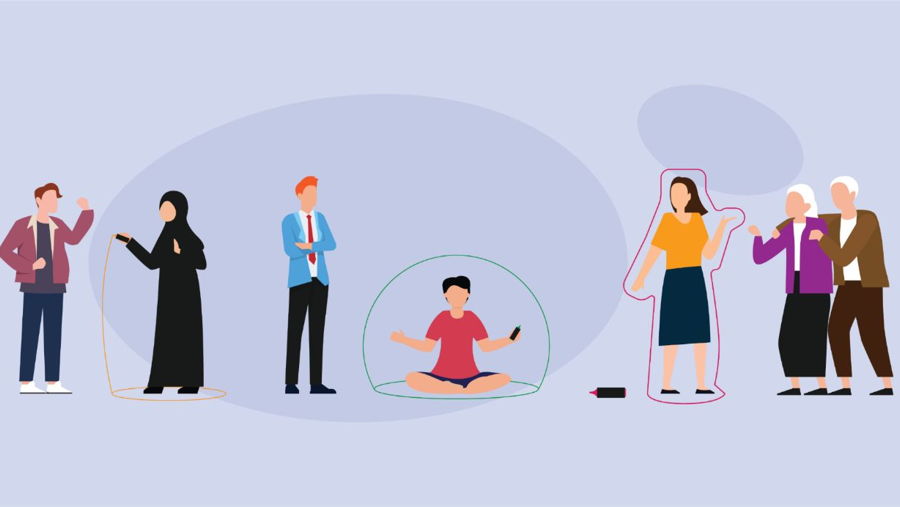
104599 Where You End and I Begin: A Somatic Intensive for Boundary Restoration
This advanced interactive training offers an in-depth somatic framework for understanding boundary rupture and restoration through the lens of the autonomic nervous system. Drawing from Somatic Experiencing and polyvagal theory, participants will examine nuanced clinical presentations where boundary collapse is common, deepen their understanding of embodied defense responses, engage in experiential boundary mapping and regulation practices, and develop more advanced...
You ask a client to notice their feet on the floor... and they look at you like you just offered to read their horoscope.
Maybe they laugh, or maybe they say, politely, “I’m not really a body person,” or maybe they say nothing at all, and you watch their shoulders creep up toward their ears while they wait for the weird part of the session to be over.
If you’ve started bringing somatic interventions into your work, you’ve probably had a moment like this. And if you’re like a lot of the clinicians I train, you felt pulled in two directions. Part of you wanted to drop it and go back to talking. Another part wanted to explain the research harder, as if the right citation would finally win them over.
Neither one tends to go well.
When I first started working with trauma clients, I saw resistance the way many of us were taught to see it in graduate school: as something to get past. I remember feeling frustrated when clients canceled, or intellectualized, or told me “I don’t want to go there today” for the third week in a row. It took me a while to see that the hesitation was telling me something useful.
That shift sits at the center of my upcoming presentation, How to Introduce Somatic Work to Skeptical/Resistant Clients. Here’s a preview of how I think about it.
Where the Doubt Comes From
Most of our clients learned a pretty specific story about how people get better: you talk about it, you take medication, you think differently, or you push through.
Our culture backs that story up with narratives like, “mind over matter” or “just think positive.” For a lot of people, the body is something that gets in the way (or something that has betrayed them), not a place they’d go looking for answers.
Then there’s the history clients carry in with them. Some tried meditation once and felt more anxious, not less. Some had a therapist who rushed them. Some hear “notice your body” and picture a wellness influencer, not a clinician.
So when a client pushes back, they usually aren’t being difficult. They’re being consistent with everything they’ve been taught.
Here’s the part that surprised me, though: Clients aren’t always as skeptical as we expect. In a 2025 qualitative study of patients with PTSD at an urban safety net primary care clinic, participants found somatic therapy broadly acceptable. They described their trauma symptoms as something they felt physically, and one patient said everything else felt like “talk, talk, talk” (Sariahmed et al., 2025). For some of those patients, bad experiences with earlier treatment actually made them more open to trying something new.
I think that’s worth getting curious about: could the skepticism in the room be ours? We brace for pushback, we over-explain, and the client picks up on our nervousness before we’ve said a word about their body.
Skepticism Is the Nervous System Asking a Question
Stephen Porges (2011) uses the term neuroception for the way the nervous system scans for cues of safety and threat below conscious awareness. Peter Levine’s (2010) work on survival responses gives us a way to see the body’s protective reactions as intelligent instead of broken.
Put those two ideas side by side and client doubt starts to look different. Before a client decides whether somatic work is legitimate, their body is already deciding whether it feels safe. The way I put it to clinicians is this: “Is this safe?” tends to come before “Is this true?”
That’s why a debate about evidence rarely settles anything. If a client’s system reads “close your eyes and go inside” as a threat, the best research summary in the world won’t land. What helps is making the first step small enough that the body can say yes to it.

104671 Preventing Boundary Violations in the Therapy Relationship
Therapeutic boundaries define the roles and limitations of the relationship between therapist and client. Therapists often struggle with maintaining clear professional boundaries, particularly when navigating dual relationships, bartering, countertransference, and the complexities of telehealth. Primary areas of concern include dual relationships both sexual and non sexual, setting and managing professional boundaries, the risks of bartering, delayed discovery in multiple relationships,...
Motivational Interviewing Got Here First
If this reframe sounds familiar, it might be because the Motivational Interviewing world went through its own version of it. William Miller (2023) has written about how he and his colleagues moved away from the word “resistance.” Theresa Moyers pointed out to them that most of what they’d been calling resistance was really sustain talk, one side of a person’s ambivalence.
MI now separates sustain talk (a client’s arguments for staying the same) from discord, which has to do with the relationship between client and clinician. Both tend to predict poorer outcomes when they dominate a session. But Miller is clear that both respond to how the clinician shows up, and neither one is a fixed trait of the client.
I find that freeing because, if a client’s “no” is partly a response to how I asked, then I can ask differently.
The Body Usually Answers First
Long before a client verbalizes “this isn’t for me,” their body has often said it already.
In my own practice, the first thing I usually notice is the breath. It gets shallower, or it stops for a beat, or it goes uneven. Then I’ll see muscle tone shift, especially in the jaw, shoulders and hands. Sometimes there are autonomic signs, like flushing or sweating or a client going a little pale. Often there’s a small movement away from me: leaning back, angling the chair, tucking the feet under. And sometimes the whole posture braces, with arms crossed and the chest pulled in.
None of these mean you’ve done something wrong. They mean the client’s system is giving you information, and you get to adjust before the hesitation turns into a full stop.
And, don’t forget, your own body counts too. If you notice yourself getting tense, rushed or suddenly sleepy right as you introduce somatic work, pay attention to that. You’re in the room with their nervous system, and it’s in the room with yours.

104830 Reclaiming the Body After Reality Distortion: Somatic Work in Narcissistic Abuse Recovery
Clients leaving relationships with narcissistic or antagonistic partners, parents, or employers often describe the same complaint: they no longer trust what they see, feel, or remember. Research on gaslighting links this experience to a diminished sense of self and mistrust of others. Insight helps clients name what happened, yet many still carry the doubt in their bodies long after they...
Speaking Their Language
One of the biggest shifts in how I teach this is simple. I stopped trying to turn skeptics into believers. Now I try to build a bridge from where they already are.
That bridge looks different for different clients. With a client who loves CBT, I talk about the thought-body connection; they already accept that thoughts affect feelings, so it isn’t a big leap to add that feelings show up physically. With a client of faith, I might talk about how God designed the body to heal. I use the language of autonomic nervous system regulation for a client who trusts the medical model. And with the busy, practical client, I skip the theory and offer a 30-second reset they can use in the car.
That last group has some backing in the research. In a qualitative study of 30 military veterans who went through either Somatic Experiencing or prolonged exposure, participants described SE as building skills they could use across different situations (Harwood-Gross et al., 2025). For a client who wants something practical, “here’s a skill you can take with you” is a much easier sell than “let’s see what comes up.”
The pushback itself tends to come in a few familiar forms.
When a client says, “This sounds too woo-woo for me,” I don’t argue. I might say, “That’s fair. A lot of people feel that way at first. Can I tell you what I mean by it, and you can tell me if it sounds useful?”
When a client says, “I don’t want to feel my feelings,” I believe them. “Okay. We don’t have to go anywhere near that. What if we just noticed what’s around you in the room?”
And when a client says, “I tried meditation and it made me more anxious,” I tell them that makes sense. Sitting still with your eyes closed and turning inward can be a lot for a nervous system that has been on guard for a long time. What I’m suggesting will look different.
Start Where the Nervous System Says Yes
The framework I’ll spend the most time on in the presentation is what I call the staircase. It’s a set of six graduated entry points I’ve developed in my clinical work, moving from the least threatening to the most direct:
- Environmental awareness: orienting to the room and noticing what catches your eye
- External sensation: feet on the floor, back against the chair, something in your hands
- Breath without breathwork: noticing one normal breath, with no technique attached
- “Where do you feel it?”: linking an emotion the client already named to a place in the body
- Resourcing through memory: calling up a place, real or imagined, where they feel settled, and noticing what happens physically
- Direct sensation tracking: following sensation in real time as it moves and shifts
Most skeptical clients can start at level one without feeling like they’re doing “therapy” at all. “Before we start, take a look around the room. Is there anything that catches your eye?” It feels like conversation. It doesn’t ask them to close their eyes or go inward. For a lot of clients, it’s the first time a body-based intervention has felt like something they could do instead of something being done to them.

104799 How to Introduce Somatic Work to Skeptical Or Resistant Clients
Many clients come to therapy expecting to talk. When a clinician asks them to notice their breath or feel their feet on the floor, the answer may be polite hesitation or a firm “this isn’t for me.” Clinicians new to somatic methods often read this as a lack of readiness. They either drop body-based work altogether or push past what...
From there, you watch. You let their system show you when it’s ready for the next step. Some clients move up the staircase in a single session. Others stay on the first two steps for weeks, and that’s fine. Titration and pendulation, two core ideas in Levine’s work, are what keep the pace tolerable.
What I Hope You’ll Take Into the Room
You don’t have to win the argument or need the perfect citation ready to go. You just need a first step small enough, and language familiar enough, that the client’s body can say yes.
Then let their own experience do the rest.
Even the most skeptical client can’t argue with their own lived experience of relief.
If you’d like to practice this together, I’d love to see you at the live presentation. We’ll walk through the staircase, practice bridge language and talk through the clients who tend to stump us most: the intellectualizer, the client who insists nothing works and the people-pleaser who agrees to everything and then quietly doesn’t do it. ◼
104599 Where You End and I Begin: A Somatic Intensive for Boundary Restoration
This advanced interactive training offers an in-depth somatic framework for understanding boundary rupture and restoration through the lens of the autonomic nervous system. Drawing from Somatic Experiencing and polyvagal theory, participants will examine nuanced clinical presentations where boundary collapse is common, deepen their understanding of embodied defense responses, engage in experiential boundary mapping and regulation practices, and develop more advanced...
Want to make the most of everything Impact CE has to offer?
The Ignite Membership unlocks Premium events and Masterclasses, Unlimited Live Webinars, Hundreds of Self-Paced Courses, a Growing Library of Recorded Content, and Free E-Library access — all in one place, for one low annual price. Learn more about Ignite today.
References
- Harwood-Gross, A., Elias, S., Lerner, K., Nacasch, N., Lawi, C., Brom, D., & Barak, A. (2025). Veterans’ experiences of somatic experiencing and prolonged exposure therapies for post-traumatic stress disorder: A qualitative analysis. Psychology and Psychotherapy: Theory, Research and Practice, 98(1), 175–192. https://doi.org/10.1111/papt.12570
- Levine, P. A. (2010). In an unspoken voice: How the body releases trauma and restores goodness. North Atlantic Books.
- Miller, W. R. (2023). The evolution of motivational interviewing. Behavioural and Cognitive Psychotherapy, 51(6), 616–632. https://doi.org/10.1017/S1352465822000431
- Porges, S. W. (2011). The polyvagal theory: Neurophysiological foundations of emotions, attachment, communication, and self-regulation. W. W. Norton.
- Sariahmed, K., Alshabani, N., & Morone, N. (2025). The acceptability of somatic therapy for PTSD among patients at an urban safety net primary care clinic. Global Advances in Integrative Medicine and Health, 14. https://doi.org/10.1177/27536130251366942
Opinions and viewpoints expressed in this article are the author's, and do not necessarily reflect those of CE Learning Systems.