The Psychology of Perfectionism and Obsessive-Compulsive Personality Disorder OCPD
Live Event

The Psychology of Perfectionism and Obsessive-Compulsive Personality Disorder OCPD

Tue, Feb 9th, 2027
11:00am – 2:15pm US Eastern Time
Skip to Event Registration Info

About the Event

Perfectionism can function as a personality trait, a temporary state, or a pattern of behaviors that significantly affects emotional well-being, relationships, and functioning. This training explores the psychology of perfectionism, including developmental origins, early life experiences, family and cultural influences, core beliefs, schemas, and behavioral patterns that may contribute to its development and maintenance. Participants will learn strategies for assessing and conceptualizing adaptive and maladaptive perfectionism using clinical interviewing, screening measures, and case formulation. The course will also examine the diagnostic features and etiology of Obsessive-Compulsive Personality Disorder (OCPD), with attention to rigidity, control, perfectionism, interpersonal functioning, and common clinical presentations. Particular emphasis will be placed on differentiating OCPD from Obsessive-Compulsive Disorder (OCD), including differences in symptom presentation, function, insight, and treatment considerations. Evidence-based and evidence-informed interventions for perfectionism and OCPD will be explored, with practical strategies for addressing rigid beliefs, maladaptive schemas, avoidance, self-criticism, behavioral patterns, and difficulties with flexibility.

Live Event
This live online event will be held as a Zoom Webinar. Attendees will have the option to interact through features such as the Chat and Q&A, but cameras and microphones will not be enabled.

Live Event Instructor

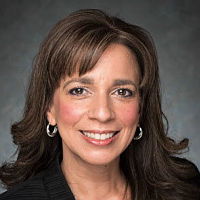
Diane Bigler

Diane Bigler

Diane Bigler, LCSW, LSCSW has over 25 years of experience in social work and mental health practice. She is a frequent national continuing education speaker and former Professor of Social Work at The University of Kansas, School of Social Welfare. Diane has been involved in the provision of clinical supervision for over 15 years and has trained hundreds of clinicians on succeeding at supervision.

Target Audience

This live interactive is intended for Behavioral Health and Addictions professionals, including psychologists, social workers, counselors, marriage & family therapists, art therapists, school psychologists, psychoanalysts, music therapists, behavior analysts, school counselors, and addiction counselors. It is appropriate for all levels of knowledge.

Learning Objectives

After taking this activity, you should be able to:

  1. 1 Differentiate adaptive and maladaptive perfectionism, OCPD, and OCD by examining developmental factors, core beliefs, behavioral patterns, and diagnostic features.
  2. 2 Apply assessment, screening, and case-conceptualization strategies to identify perfectionistic traits, maintaining mechanisms, functional impairment, and OCPD-related patterns.
  3. 3 Select appropriate evidence-based and evidence-informed interventions for perfectionism and OCPD based on individual case formulation, treatment targets, and client needs.

Bowers, E. M., Levin, M. E., Ong, C. W., & Twohig, M. P. (2025). A randomized controlled trial of self-help acceptance and commitment therapy and cognitive behavioral therapy for perfectionism. Behaviour Research and Therapy, 192, 104806. https://doi.org/10.1016/j.brat.2025.104806

Callaghan, T., Greene, D., Shafran, R., Lunn, J., & Egan, S. J. (2024). The relationships between perfectionism and symptoms of depression, anxiety and obsessive-compulsive disorder in adults: A systematic review and meta-analysis. Cognitive Behaviour Therapy, 53(2), 121–132. https://doi.org/10.1080/16506073.2023.2277121

Galloway, R., Watson, H., Greene, D., Shafran, R., & Egan, S. J. (2022). The efficacy of randomised controlled trials of cognitive behaviour therapy for perfectionism: A systematic review and meta-analysis. Cognitive Behaviour Therapy, 51(2), 170–184. https://doi.org/10.1080/16506073.2021.1952302

Pinto, A., Teller, J., & Wheaton, M. G. (2022). Obsessive-compulsive personality disorder: A review of symptomatology, impact on functioning, and treatment. Focus, 20(4), 389–396. https://doi.org/10.1176/appi.focus.20220058

Wheaton, M. G., Ward, H. E., & Pinto, A. (2022). Obsessive-compulsive disorder with co-occurring obsessive-compulsive personality disorder: A practice focused review. Journal of Cognitive Psychotherapy. https://doi.org/10.1891/JCP-2022-0023

Disclosure to Learners

CE Learning Systems adheres to the ACCME's Standards for Integrity and Independence in Accredited Continuing Medical Education. Any individuals in a position to control the content of a CE activity – including faculty, planners, reviewers, or others ― are required to disclose all relevant financial relationships with ineligible entities (formerly known as commercial interests).

The following relevant financial relationships have been disclosed by this activity's planners, faculty, and the reviewer:

Planners and Reviewers

The planners of this activity have reported that they have no relevant financial relationships.

Faculty

There are no known relevant financial relationships to disclose.

Commercial support

There is no commercial support for this distance-learning course.
Use our CE Approvals tool to look up your state requirements and how can help you meet them, or log in to your member account to show approvals relevant to your licensure.

Joint Accreditation (JA)

3 Psychologist CE credit hours
3 Social Worker CE credit hours Clinical
Eligible until Feb 9th, 2027
In support of improving patient care, CE Learning Systems, LLC, is jointly accredited by the Accreditation Council for Continuing Medical Education (ACCME), the Accreditation Council for Pharmacy Education (ACPE), and the American Nurses Credentialing Center (ANCC), to provide continuing education for the healthcare team.
More Info

American Psychological Association (APA)

3 CE credit hours Clinical
Eligible until Feb 9th, 2027
Continuing Education (CE) credits for psychologists are provided through the co-sponsorship of the American Psychological Association (APA) Office of Continuing Education in Psychology (CEP). The APA CEP Office maintains responsibility for the content of the programs.
More Info

Association of Social Work Boards (ASWB ACE)

3 CE credit hours Clinical
Eligible until Feb 9th, 2027
As a Jointly Accredited Organization, CE Learning Systems LLC is approved to offer social work continuing education by the Association of Social Work Boards (ASWB) Approved Continuing Education (ACE) program. Organizations, not individual courses, are approved under this program. Regulatory boards are the final authority on courses accepted for continuing education credit. Social workers completing this course receive 3 clinical continuing education credit(s).
More Info

National Board for Certified Counselors (NBCC)

3 CE credit hours
Eligible until Feb 9th, 2027
CE Learning Systems has been approved by NBCC as an Approved Continuing Education Provider, ACEP No. 5951. Programs that do not qualify for NBCC credit are clearly identified. CE Learning Systems is solely responsible for all aspects of the programs. 3 NBCC hour(s) awarded.
More Info

NAADAC, the Association for Addiction Professionals (NAADAC)

3 CE credit hours
Eligible until Feb 9th, 2027
This course has been approved by CE Learning Systems, service provider of Impact CE, as a NAADAC Approved Education Provider, for educational credits. NAADAC Provider #192243, CE Learning Systems is responsible for all aspects of their programming.
More Info

Florida Certification Board (FCB)

3 CE credit hours
Eligible until Feb 9th, 2027
Impact CE, a service of CE learning Systems, is approved by the Florida Certification Board (FCB) to offer continuing education programs (Provider # 5069A).
More Info

Missouri Credentialing Board (MCB)

3 CE credit hours
Eligible until Dec 30th, 2026
AddictionCounselorCE is an approved provider of the Missouri Substance Abuse Professional Credentialing Board (Provider #101). AddictionCounselorCE maintains responsibility for this course and its contents.
More Info

New York Education Department Board of Social Work

3 contact hours
Eligible until Feb 9th, 2027
CE Learning Systems, LLC, (d/b/a impactce.com) is recognized by the New York State Education Department's State Board for Social Work as an approved provider of continuing education for licensed social workers. Provider #0060.
More Info

New York Education Department Board of Creative Arts Therapy (NYSEDCAT)

3 CE credit hours
Eligible until Feb 9th, 2027
CE Learning Systems (d/b/a impactce.com) is recognized by the New York State Education Department's State Board for Mental Health Practioners as an approved provider of continuing education for licensed creative arts therapists. #CAT-0008
More Info

New York Education Department Board of Mental Health Counseling

3 CE credit hours
Eligible until Feb 9th, 2027
CE Learning Systems, LLC (d/b/a impactce.com) is recognized by the New York State Education Department's State Board for Mental Health Practitioners as an approved provider of continuing education for licensed mental health counselors. #MHC-0072.
More Info

New York Education Department Board of Psychologists

3 CE credit hours
Eligible until Dec 29th, 2026
CE Learning Systems, LLC, (d/b/a impactce.com) is recognized by the New York State Education Department's State Board for Psychology as an approved provider of continuing education for psychologists, # PSY-0016.
More Info

New York Education Department Board of Marriage and Family Therapy

3 CE credit hours
Eligible until Feb 9th, 2027
CE Learning Systems, LLC (d/b/a impactce.com) is recognized by the New York State Education Department's State Board for Mental Health Practitioners as an approved provider of continuing education for licensed marriage and family therapists #MFT-0045.
More Info

Virginia Certification Board (VCB)

3 CE credit hours
Eligible until Feb 9th, 2027
Virginia Certification Board educational provider # 106
More Info

Event Agenda

Agenda times are listed in US Eastern Time. That is 3 hours later than US Pacific Time. The event starts at 8:00am US Pacific Time.

11:00 AM–12:30 PM: Part 1 – Understanding Perfectionism
  • Welcome, Course Overview, and Learning Objectives
  • Understanding Perfectionism
  • Defining Perfectionism
  • Adaptive vs. Maladaptive Perfectionism
  • Perfectionistic Strivings vs. Perfectionistic Concerns
  • Trait, State, and Behavioral Manifestations
  • Origins and Development of Perfectionism
  • Early Childhood and Developmental Experiences
  • Parenting and Family Dynamics
  • Attachment and Relational Experiences
  • Cultural, Social, Academic, and Occupational Influences
  • Core Beliefs, Schemas, and Conditional Assumptions
  • How Perfectionism Manifests Clinically
  • Rigidity and Unrealistic Standards
  • Fear of Mistakes, Failure, and Criticism
  • Procrastination, Avoidance, and Overpreparation
  • Reassurance Seeking and Checking
  • Self-Criticism, Shame, and Conditional Self-Worth
  • Interpersonal and Occupational Consequences
  • Clinical Challenges and Barriers
  • When Clients View Perfectionism as Necessary or Beneficial
  • Ambivalence About Changing Standards
  • Avoidance and Fear of Therapeutic Failure
  • Perfectionism Within the Therapy Relationship
  • Case Study #1: Identifying Perfectionistic Beliefs, Behaviors, Maintaining Factors, Strengths, and Functional Impairment
  • Learning Application: “Adaptive or Maladaptive?” Brief Clinical Scenarios and Whole-Group Discussion


12:30–12:45 PM: BREAK


12:45–2:15 PM: Part 2 – OCPD, Differential Diagnosis, and Treatment

  • What Is Obsessive-Compulsive Personality Disorder (OCPD)?
  • Definition and Core Features
  • DSM-5-TR Diagnostic Criteria
  • Pervasiveness, Stability, and Functional Impairment
  • Orderliness, Perfectionism, Control, Rigidity, and Inflexibility
  • How OCPD Manifests in Personality and Relationships
  • Work and Productivity
  • Decision-Making and Delegation
  • Emotional Expression
  • Interpersonal Control and Conflict
  • Rules, Morality, Standards, and Expectations
  • The Relationship Between Perfectionism and OCPD
  • When Perfectionistic Traits Become Personality Pathology
  • Perfectionism Without OCPD
  • Assessing Rigidity, Impairment, and Pervasiveness
  • OCPD vs. OCD
  • Personality Patterns vs. Obsessions and Compulsions
  • Insight and Relationship to Symptoms
  • Differential Diagnosis and Common Areas of Confusion
  • Assessment and Case Conceptualization
  • Clinical Interviewing and Screening
  • Identifying Maintaining Mechanisms
  • Assessing Functional and Relational Impairment
  • Treatment Approaches and Clinical Strategies
  • CBT and Cognitive Restructuring
  • Behavioral Experiments and Flexibility Practice
  • Schema-Focused Interventions
  • ACT and Acceptance-Based Strategies
  • Addressing Self-Criticism, Avoidance, Control, and Rigid Standards
  • Case Study #2: Perfectionism, OCPD, OCD—or Overlapping Features? Differential Diagnosis and Treatment-Planning Discussion
  • Closing Learning Application: Treatment Selection Challenge, Key Clinical Takeaways, and Review of Learning Objectives

Policies

If a grievance arises pertaining to your participation in our continuing education activities, please contact our support team immediately. See our full grievance policy for more information.

ADA accommodations will be made in accordance with the law; please indicate your special needs when you register by contacting us.

Up to 30 days prior to the event, live event registrations may be canceled for a refund via the current courses tab in your member account. Less than 30 days prior to the event, live event registration purchases are not eligible for a refund, but can be transferred to a different event. Please contact our support team for assistance with changing your registration.

  • This is a live event, hosted via Zoom Webinar. you may be prompted to download or upgrade your Zoom app if using a mobile device. A strong WiFi/internet connection will be required for best quality.

  • We recommend clicking your "Join Webinar" button early and checking that your speakers are on before the event begins. Please do not worry about being seen or heard! Attendee video feeds and mics are turned off by default when entering a webinar. You will be able to ask questions via the Q&A feature. You may test your Zoom connection prior to the event at the Zoom Test page .

  • Please respect that no copying, recording, or distribution of live session content is allowed.

We report all course and event completions to CE Broker. If your licensing board uses CE Broker for CE tracking, please be sure to enter your correct license information in your account.

If you need to cancel your registration for a webinar, please contact our support team for assistance prior to the event. Please note our refund policy, above.

If the activity must be cancelled by the provider, all attendees will receive an email notifying them of the cancellation. The email will also provide details about transferring the registration to another educational activity or receiving a refund of the registration fee. As always, you can contact our support team if you have questions or concerns.

Frequently Asked Questions

Once you register, you'll receive an email with the link and instructions to join the live event. The event will be hosted via Zoom. You may test your Zoom connection prior to the event at the Zoom Test page We recommend logging in 10-15 minutes early to be sure your connection is ready.

Most live events are recorded and made available to registered participants for a limited time after the event. Check your event materials for specific details about recording availability.

Certificates for live events are typically available within shortly after the event concludes, as soon as attendance verification is completed. You'll receive an email notification when your certificate is ready to download.

If the event is recorded, you may be able to access the recording after the live session. Contact support for information about makeup options for your specific event.

If you need to withdraw 30 or more days before the event, you can do this your self from your current courses tab.

Start your CE Journey now - complete your first course today, on us.

Try for free - no commitment required.

Copyright © 2026 CE Learning Systems LLC

Please Confirm