Supporting the Perinatal Journey
What Every Massage Therapist Should Know About Prenatal Care
"Stress is the worst enemy of a normal pregnancy."
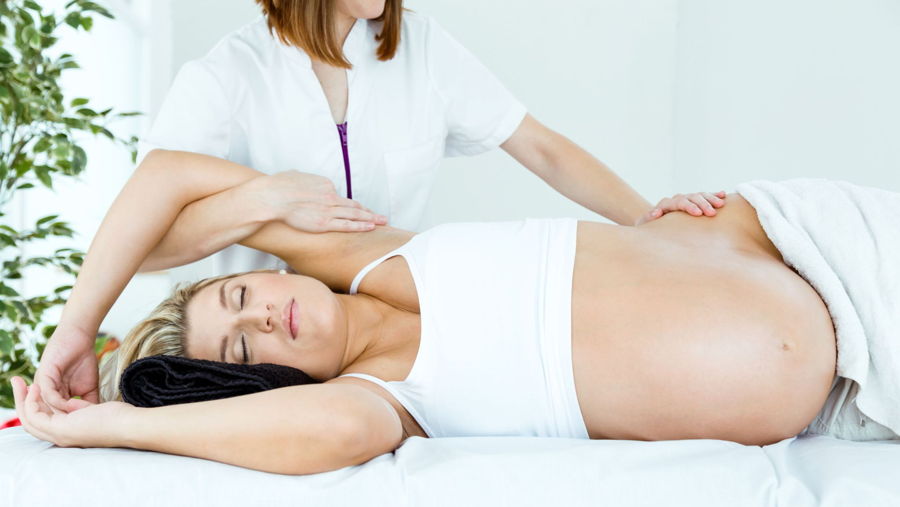
104455 Prenatal Massage Myths: How to Work With Pregnant Clients
Worried that you'll make a pregnant client go into labor by massaging their feet? Terrified of touching that belly? Just plain confused about where, and when, and how, to help your pregnant clients? Move beyond the myths. This webinar will present what we do and don't know about how massage therapy impacts pregnant clients, and will explore how you can...
Prenatal massage is a young modality.
It wasn't recognized as a distinct practice until the very end of the 1970s, following decades of dramatic swings in how American culture approached childbirth itself, from home births attended by midwives, to a 1960s shift that saw 97% of births move into hospitals, to a 1970s resurgence of midwifery and natural birth practices that opened the door for massage to enter the conversation.
Jenn Taylor, LMT, a licensed massage therapist since 2006 and nervous system coach with two decades of specialization in perinatal work, frames that history as context for a persistent problem: the field is still young enough that most massage therapists graduate school with almost no real training in it. Taylor recalled receiving only about two hours of instruction on the subject in her own massage program, before going on to specialize in the very population she now teaches other therapists to serve. "I did not have a lot of information," she shared in her September Premium presentation. "I did not have a lot of confidence. I didn't know anything about positioning and contraindications."
A Modality Still Proving Itself
That educational gap has consequences that ripple outward, and therapists who feel uncertain and under-trained transmit that uncertainty directly to clients. "That nervousness and feeling uncertain definitely translates over to what our clients feel," Taylor said in her September series. Clients, in turn, often arrive having absorbed contradictory information from the internet or well-meaning friends, sometimes avoiding massage altogether based on secondhand myths, or waiting until pain becomes unbearable in the third trimester rather than understanding the modality's benefits from the very start of pregnancy.
And those benefits are more substantial than most clients (or therapists) realize: Research dating back to a 1999 study in the Journal of Psychosomatic Obstetrics and Gynecology found that pregnant clients receiving regular massage reported reduced anxiety, improved mood, better sleep, and less back pain, alongside measurable reductions in stress hormones like cortisol and norepinephrine and increases in dopamine, serotonin, and oxytocin. Subsequent research has pointed to even more striking outcomes tied to regular massage throughout pregnancy: labor shortened by as much as 25%, a 50% reduction in C-section rates, a 30% decrease in pain medication use during labor, and a 60% decrease in epidural requests. The effects extend to the baby as well, with infants of mothers who received regular massage have shown improved Apgar scores, the standard assessment of a newborn's condition immediately after birth.
The mechanism behind those outcomes comes down to stress physiology. "Stress is the worst enemy of a normal pregnancy," as Taylor puts it. Chronic stress during pregnancy elevates catecholamines and reduces oxytocin (the hormone tied to touch and bonding) which can decrease uterine blood flow to the baby. Anxiety triggers the release of CRH, a hormone that can prompt uterine contractions earlier than intended; research has linked chronic stress during pregnancy to preterm labor as a result. Taylor's clinical priority in every session follows directly from this physiology: getting a client's nervous system into a parasympathetic state, so the body can genuinely restore rather than continue operating from a place of sympathetic activation.
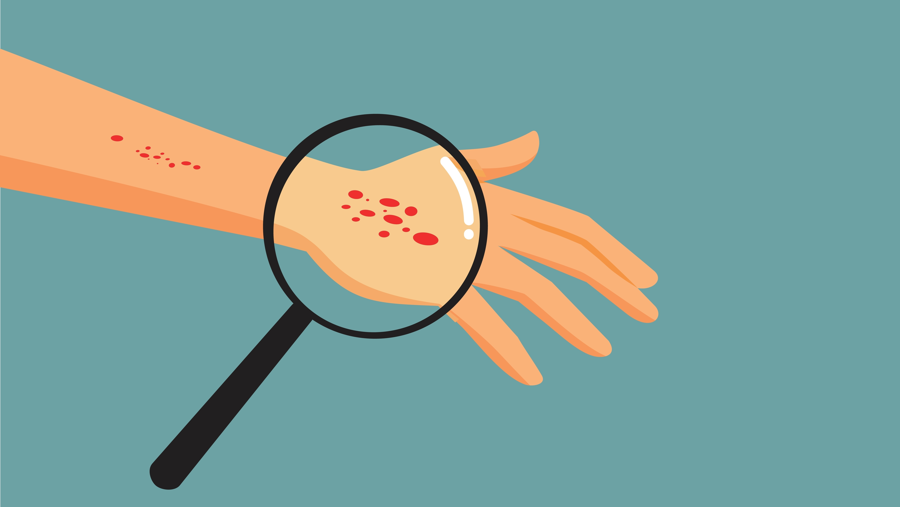
104461 Massage Therapy and Pathology: Common and Contagious Skin Conditions
Massage therapists work closely with the skin, so it is vital to be well-informed about common and contagious skin problems. This class covers the definition, demographics, pathophysiology, signs and symptoms, treatment options, and role of massage for the following: herpes simplex, staph infections (including MRSA), psoriasis, dermatitis/eczema, and skin cancer.
**This course is based on the recorded webinar, Massage Therapy...
Separating Myth From Evidence
Much of the caution surrounding prenatal massage, Taylor argues, isn't rooted in evidence, but rooted in liability concerns and outdated assumptions that have calcified into rules.
The clearest example is the widespread belief that massage should be avoided entirely in the first trimester. The real reasoning, however, is more nuanced: roughly 90% of miscarriages occur within the first eight weeks of pregnancy, a period during which many practices simply decline to see clients at all, in part to avoid the appearance of causation if a miscarriage happens to follow a massage session. "There has never been any kind of research or information that says massage, as long as you are trained, can cause a miscarriage," Taylor said, a distinction she considers essential for therapists to understand, even as she respects that some practitioners and organizations will choose caution regardless.
A second persistent myth concerns so-called endangerment points, acupressure points on the legs, feet, and hands historically believed to be dangerous to touch during pregnancy. Taylor's own thinking on this evolved over years of teaching, moving from an early "avoid entirely" consensus to an opposite extreme where some therapists dismissed the concern altogether, before she went directly to acupuncturist colleagues for clarity. Their answer, consistent across every practitioner she consulted: these points are perfectly safe to massage over.
What should be avoided is direct, sustained acupressure-style stimulation of those specific points, since several are believed to stimulate downward energy connected to the reproductive organs, relevant primarily for clients hoping to induce labor near their due date, not for a normal massage session that happens to pass over the area.
However, the legs themselves do warrant genuine, evidence-based caution, not because of energy points, but because pregnant clients are four to five times more likely to develop blood clots, driven by variables like increased blood volume, the weight of the uterus restricting circulation, and the hormone relaxin's effect on vascular smooth muscle. Taylor's guidance here, according to her September series, full-hand contact rather than fingertips, slow strokes directed toward the heart, and avoidance of any percussive or deep-tissue technique on the legs.
Pressure generally should stay moderate throughout a session. Taylor recommends nothing beyond a 6 out of 10, since pain during a massage triggers the same fight-or-flight stress response the entire session is designed to counteract. Abdominal massage, another commonly misunderstood area, is entirely appropriate with a client's explicit permission, using only the weight of the hand in a clockwise direction (though Taylor notes that most of her clients, given the choice, would rather spend that time on their low back, hips, and glutes than their belly).
The Sideline System
Positioning is where prenatal massage most visibly diverges from standard practice. The "sideline" position (as opposed to the "prone" or "supine" positioning) becomes the primary working posture as pregnancy progresses. Draping in this position takes real practice to execute smoothly: securing the sheet at the knee, maintaining coverage while accessing the back, hips, and legs, and adjusting technique for the belly, all while preserving a client's privacy and comfort throughout. "The more you do it, the more comfortable you get," Taylor said, encouraging therapists to rehearse the draping sequence with a partner or family member before trying it with a client for the first time.
That same sideline setup opens up direct, session-long access to two muscle groups that carry an outsized share of pregnancy-related pain: the psoas and the quadratus lumborum (QL). Both shorten considerably during pregnancy as a result of the anterior pelvic tilt created by a growing uterus, with the psoas, in particular, functioning as a kind of internal shelf supporting the abdominal organs, which Taylor calls, "the epitome of our core."
A tight, shortened psoas doesn't just cause localized pain; it reduces circulation to the uterus and abdominal organs, contributes to increased pain during labor, and can make common birthing positions (like squatting, or getting onto all fours) physically harder to achieve. To prepare for this, passive stretches performed on the table, along with simple client-controlled options like a standing lunge or time spent on a birthing ball, give clients tools to maintain that mobility between sessions. The QL benefits from a similarly simple stretch: dropping the top leg off the edge of the table while the client lies in sideline position, an approach so mechanically straightforward that Taylor recommends it as a take-home exercise clients can do with a partner's help.
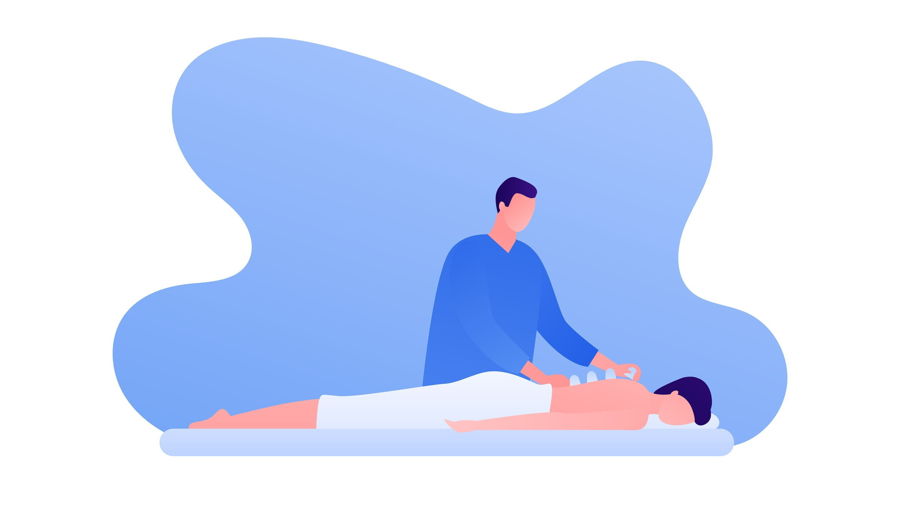
104452 Cupping Therapy 101 for Massage Therapists
Cupping Therapy offers benefits including improved circulation, immune functions and promotes overall well-being. In this presentation we will discuss the history of, and review supporting studies provided on Cupping Therapy. Different types of cups, their benefits and uses, will be modeled. Adverse effects and contraindications of Cupping Therapy will be presented, in addition to methods for client education.
**This course...
Sciatica-like symptoms round out the trimester-by-trimester pain picture, frequently traced not to true sciatic nerve inflammation but to a tightened piriformis muscle compressing the nerve where it runs beneath it. Working the piriformis directly, accessible in the sideline position, often relieves these symptoms even when the underlying issue isn't true sciatica. Pain complaints tend to follow a predictable arc across pregnancy: upper and mid-back pain dominates early in the second trimester, while lower back, hip, and glute pain become the primary focus by the third.
A Framework Versus a Formula
Taylor's own protocol has evolved considerably over the fifteen to twenty years she's spent refining it, including a shift from 60-minute to 90-minute sessions, made possible in part by simple adjustments like adding more padding to support a client's hip in sideline position for longer stretches of time.
"I really encourage you to just use this as a framework, and then make it your own," Taylor shared in her September series on Prenatal Massage. "Because it has to feel really good to you." That same flexibility extends to the draping and positioning techniques themselves, with the sideline system Taylor teaches for pregnant clients has, in her own practice, proven useful well beyond pregnancy, including for clients recovering from shoulder problems, those unable to lie prone for any number of reasons, or anyone who simply finds side-lying more comfortable than the alternatives.
What ties all of this together, more than any single technique, is the emphasis Taylor places on communication itself. Clients navigating a pregnancy (often for the first time, and often while absorbing conflicting information from every direction) consistently report that feeling safe, heard, and cared for depends less on a therapist's technical skill than on how thoroughly that skill is explained. A consultation that walks through positioning, cautions, and the reasoning behind each choice does as much to reduce a client's anxiety as any single stretch or technique performed on the table.
In a field this young, with this much lingering misinformation, that kind of clarity may be the most therapeutic tool a practitioner has. ◼
Want to make the most of everything Impact CE has to offer?
The Ignite Membership unlocks Premium events and Masterclasses, Unlimited Live Webinars, Hundreds of Self-Paced Courses, a Growing Library of Recorded Content, and Free E-Library access — all in one place, for one low annual price. Learn more about Ignite today.
Resources
- Taylor, J. (2026, September 8–22). Supporting the Perinatal Journey: A 3-part massage therapy series [Webinar]. Impact CE.
- Field, T., et al. (2010). Pregnancy and labor massage. Expert Review of Obstetrics & Gynecology, 5(2), 177-181.
.jpg)